.jpeg)
.avif)

Small pollinators, giants of ecological balance
May 20. Coinciding with World Bee Day, scientists and international organizations are once again focusing on one of the most critical insects for life on Earth. Far from being mere producers of honey, wax, or propolis, the 20,000 known species of bees play an essential role in the pollination of crops and wild plants, a key process for maintaining ecosystems and global food security.

Photo 01: Ancient witness to sweetness. This iconic cave painting, dating back some 8,000 years and found in the Cueva de la Araña in Bicorp (Valencia, Spain), constitutes the oldest known evidence of human interaction with bees.
Humans and bees: an ancient history
The relationship between humans and bees dates back thousands of years. Since prehistoric times, when cave paintings like those in the Cueva de la Araña in Bicorp (Valencia) documented the daring collection of wild honey, humans have maintained an unbreakable bond with bees. This relationship evolved with agriculture toward domestication and beekeeping in ancient civilizations such as the Egyptian, Greek, and Roman, where honey and wax became vital products for food, medicine, and rituals. Centuries later, during the Renaissance, the concept of honey gardens emerged, designed to provide habitat for these pollinators and serving as living laboratories for observing the flora-insect relationship.
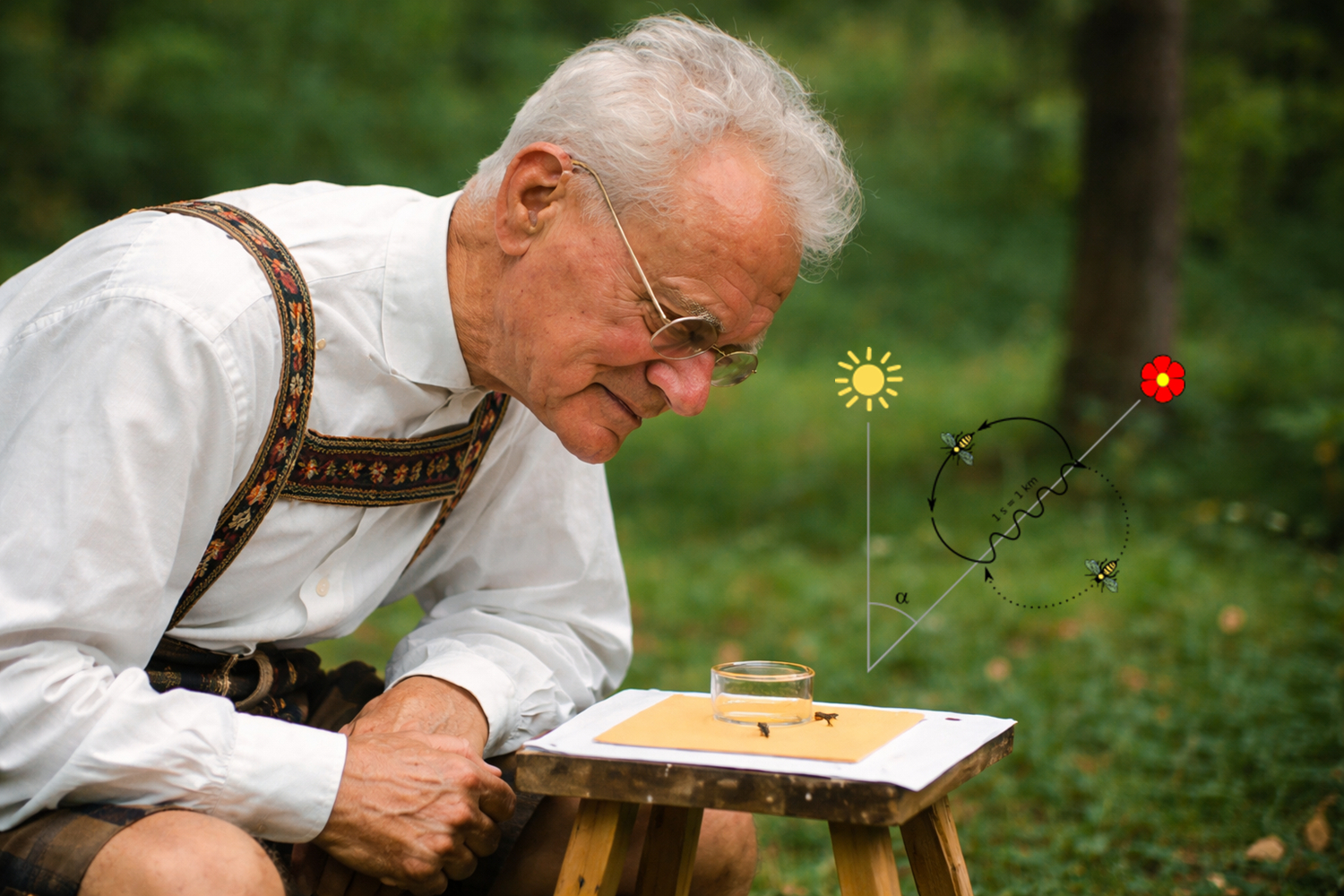
Finally, the 20th century marked a scientific milestone when zoologist Karl von Frisch deciphered the bees' complex communication system, known as "the waggle dance," a discovery that earned him the Nobel Prize in 1973 and elevated cultural admiration for the intelligence and social complexity of these creatures essential to ecosystems to a new level.
Bees, keystone species
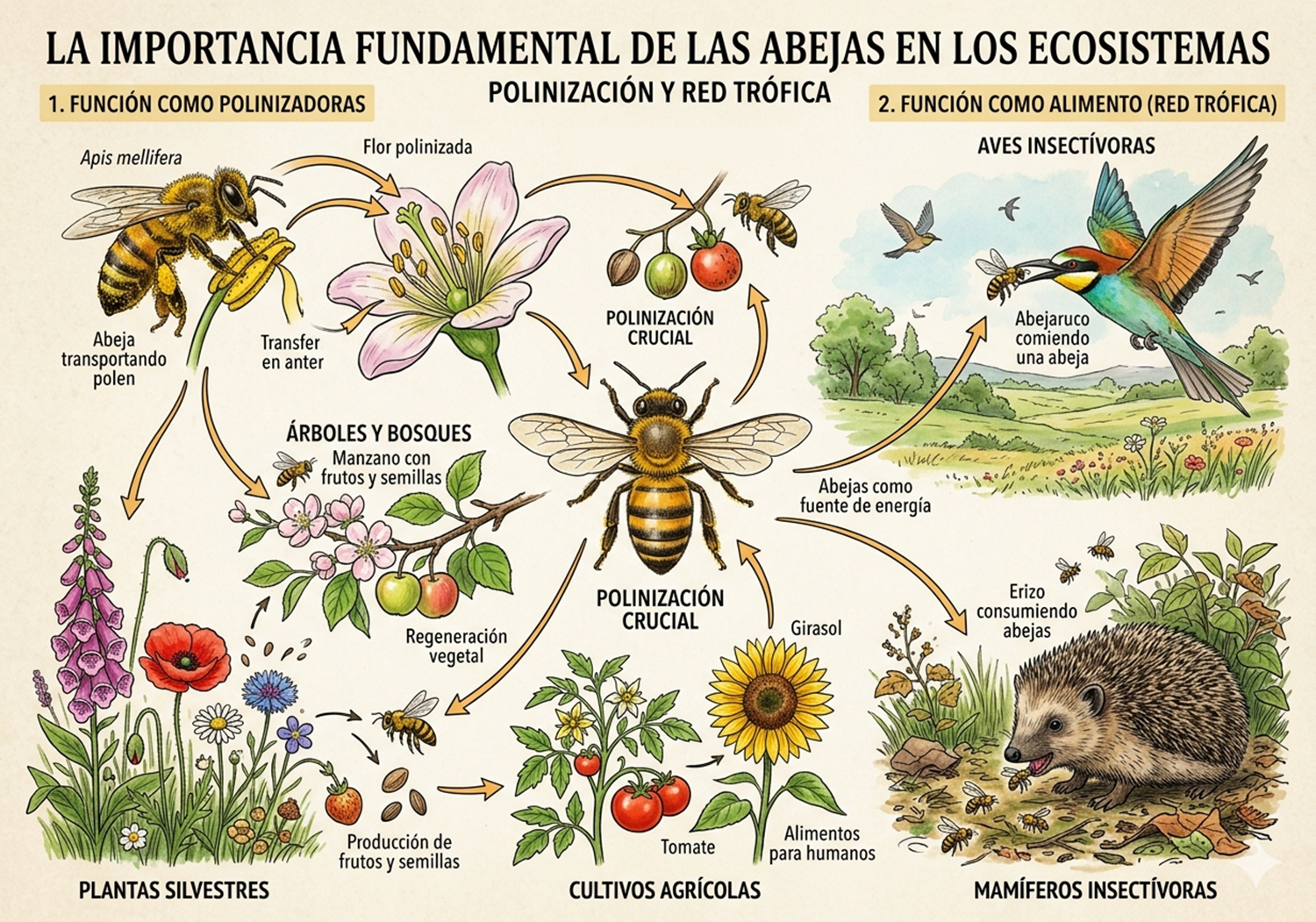
Today, the scientific community agrees that their importance goes far beyond their direct economic value. According to data supported by the Food and Agriculture Organization of the United Nations, approximately 75% of food crops depend, to a greater or lesser extent, on pollination. Furthermore, nearly 90% of wild flowering plants require animal pollinators to reproduce.
“Without bees, many ecosystems would collapse,” warn biodiversity experts. Their disappearance would affect not only fruits, vegetables, and nuts, but also animal species that depend on these plants, creating a massive domino effect. It is also worth noting that they constitute an essential food resource for insectivorous birds and mammals. This dual function places them at a critical point in ecological networks, where their decline could trigger cascading effects that impact both the structure and stability of ecosystems.
Current threats
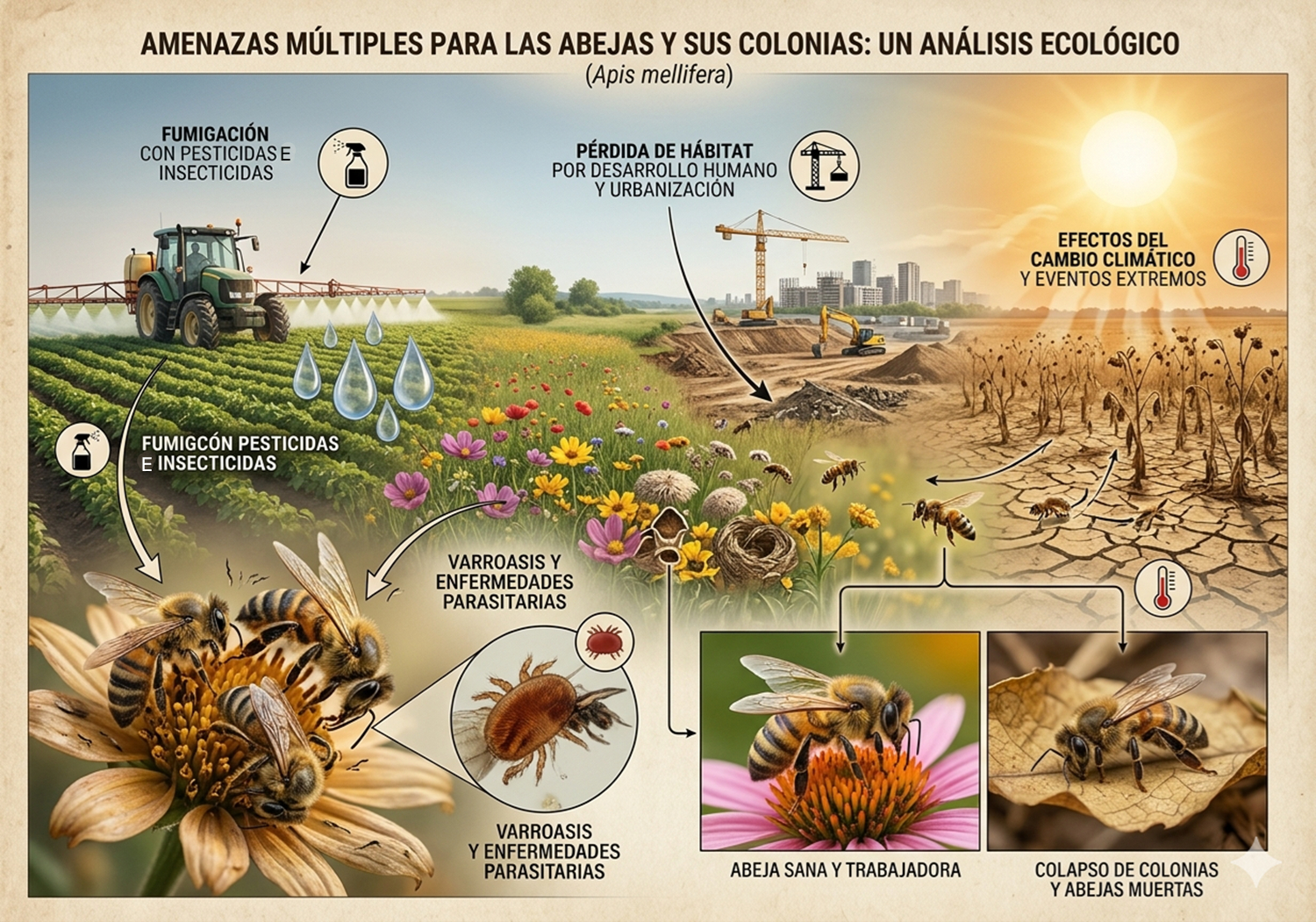
Despite their importance, bee populations are in decline in many regions of the world. Major threats include the intensive use of pesticides, loss of natural habitat, climate change, and the spread of diseases and parasites, such as the Varroa mite. Added to this is the expansion of agricultural models based on monocultures, which reduce the floral diversity necessary for their nutrition.
The impact of this decline is already a concern for international organizations and scientific bodies such as the Intergovernmental Science-Policy Platform on Biodiversity and Ecosystem Services, which are warning of the economic and ecological consequences of the loss of pollinators.
Faced with this scenario, specialists insist on the need to adopt urgent measures. From individual actions—such as planting native species or reducing the use of chemical products—to public policies aimed at habitat conservation and the promotion of sustainable agricultural practices. Although it is popularly claimed that humanity would only survive four years without bees, scientists qualify this idea. There is no exact deadline, but there is a consensus that their disappearance would trigger a severe food crisis.
Can you imagine a world without bees?
%20CARLOS%20M%20BIO.jpg)
We would like you to take a close look at the treasures that nature offers us thanks to bees; from the sweetness of fruit, grains, honey, royal jelly, propolis, and wax, essential resources that come from life in the hive. They are tangible testimonies of an ancient alliance: that of bees with the earth. Their impact on our sustenance transcends the economic; it is a matter of existence. Without bees, this market would be a desert. Their impact on our civilization is a mystery that cannot be measured only in numbers, but in the color of life itself. Is their absence not the greatest threat looming over us?
With more than 20,000 known species —and just as many waiting in the shadows of science—these little guardians are the ones who, with their tireless flight, write the destiny of our planet every day. If their buzzing were to disappear, we would face a terrifying silence. How many moons would pass before humanity succumbed to the total collapse of a world devoid of their vital hum? They are the most humble and powerful reminder that all life is interconnected.
Recommended reading to expand on this post:
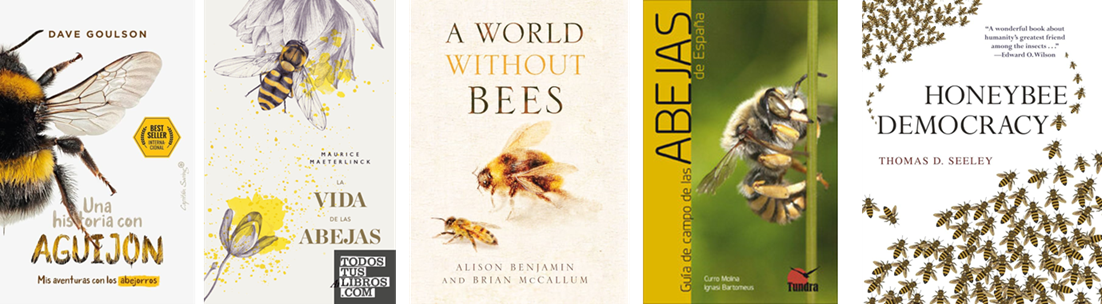
• Goulson, Dave. A Sting in the Tale: My Adventures with Bumblebees. Jonathan Cape, 2013.
Why read it: Dave Goulson is one of the world's leading experts on bumblebees and a great science communicator. This book is a blend of personal memoir, naturalistic observations, and a call to action for the conservation of these essential pollinators. It is engaging, passionate, and full of fascinating facts.
• Maeterlinck, Maurice. The Life of the Bee. Ariel Publishing, 2018
Why read it: This work is a classic of beekeeping literature. Jürgen Tautz, a neurobiologist and bee expert, offers a profound and beautifully illustrated look at the biology, behavior, and complex social organization of Apis mellifera. The photographs are spectacular and perfectly complement the text.
• Benjamin, Alison and McCallum, Brian. A World Without Bees: Why They Are Disappearing and What It Means for Us. Plataforma Actual Publishing, 2011.
Why read it: This book directly addresses the Colony Collapse Disorder (CCD) crisis. The authors investigate the multiple causes behind the disappearance of bees and analyze the serious consequences this has for agriculture and global ecosystems. It is essential reading for understanding current threats.
• Molina, Curro. Field Guide to the Bees of Spain. Tundra Publishing, 2019.
Why read it: For those who wish to learn about bee diversity beyond the honey bee, this guide is an excellent tool. It focuses on the species present in Spain (which is home to great biodiversity), with photographs, descriptions, and distribution maps. It is ideal for field identification and for appreciating the richness of wild bees.
• Seeley, Thomas D. Honeybee Democracy: How Bees Decide Where to Live. Alianza Editorial, 2021.
Why read it: Thomas Seeley is a leading authority on the study of swarming behavior. In this book, he fascinatingly explains how a bee colony makes collective decisions to choose a new home, a process he describes as a form of "democracy." It is a key work for understanding swarm intelligence and the social sophistication of bees.
.avif)
.jpeg)