
.avif)


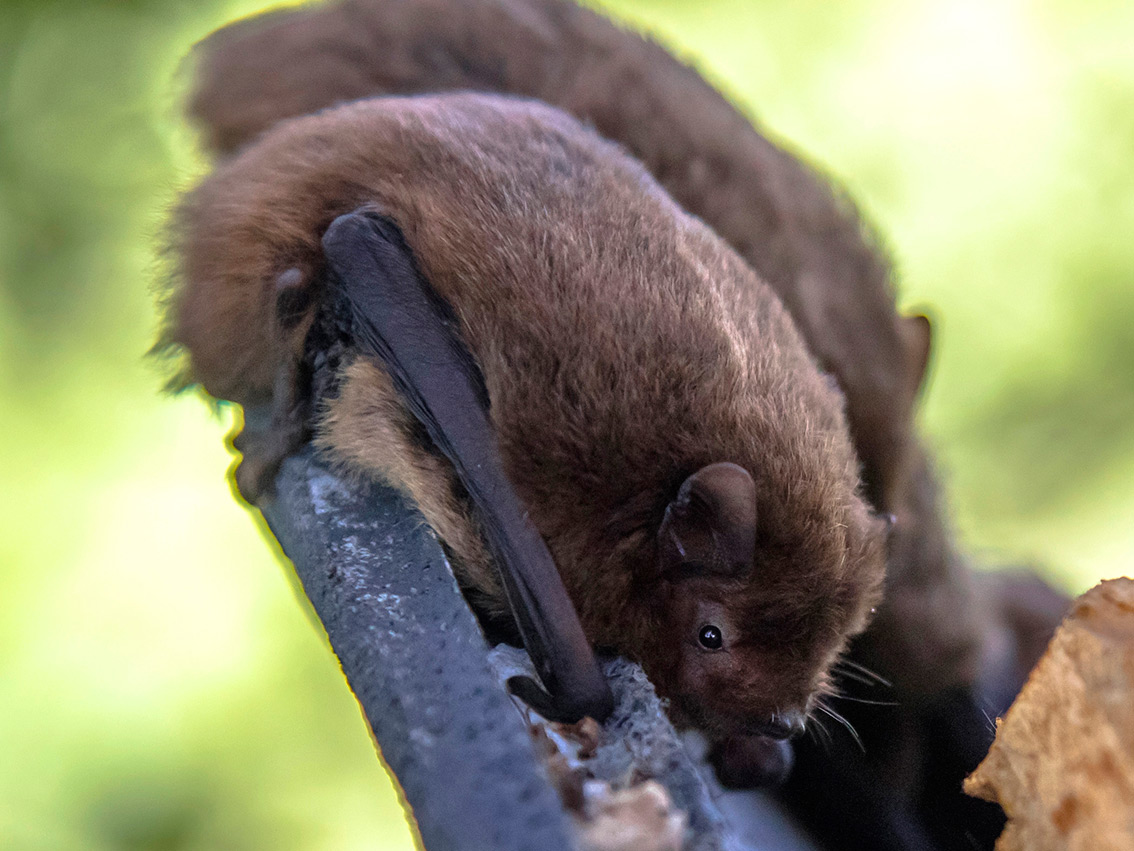
We are presenting a scientific paper reporting the first record of Nathusius' pipistrelle (Pipistrellus nathusii) in the Canary Islands and confirming the occasional presence of the lesser noctule (Nyctalus leisleri) on Lanzarote.
A Nathusius' pipistrelle (Pipistrellus nathusii) has been recorded in Lanzarote (Canary Islands), marking the southernmost documented sighting to date for this migratory European species. The finding, published in the scientific journal Acta Chiropterologica, occurred during a passive acoustic monitoring program conducted by the Biodiversity team at Ideas Medioambientales in the vicinity of the Costa Teguise wastewater treatment plant, and is accompanied by confirmation of the occasional presence of the lesser noctule (Nyctalus leisleri) on the same island.
The origin of the study: a CSR initiative in the Canary Islands
At Ideas Medioambientales, we are thrilled that, after seven long months of anticipation, the prestigious journal specializing in bat research, Acta Chiropterologica (published by the Museum and Institute of Zoology of the Polish Academy of Sciences) , has published a scientific article featuring the work of several bat experts from our extraordinary Biodiversity department team: Ángel Ruiz Elizalde, Gonzalo Páez Pérez, and María del Mar Salguero. We also had the invaluable collaboration of our dear former colleague Miguel Ángel Zarzosa (based in the Canary Islands) and Sérgio Teixeira, a renowned researcher and chiropterologist from the University of Madeira (Portugal).
This scientific article is the result of a Corporate Social Responsibility (CSR) initiative carried out by Ideas Medioambientales to conduct bat studies in the Canary Islands. It all began with a simple passive ultrasonic recorder (Wildlife Acoustics Inc. Song Meter Mini BAT model) that Miguel Ángel rotated through various locations in Lanzarote, aiming to record bat activity on an island where these flying mammals are a true rarity, as there are no known established (breeding) populations. On an island as arid as Lanzarote, the locations chosen for passive sampling necessarily had to be those with permanent water sources where bats could find a stable food supply in the form of small flying insects that swarm these water points to lay their eggs. Therefore, we decided to sample in the immediate vicinity of the island's various wastewater treatment plants, which generally also offer good roosting opportunities for bats in the form of buildings and mature trees (especially Canary Island date palms).
The discovery at the Costa Teguise wastewater treatment plant

During one of these surveys, conducted last October 2025 in the vicinity of the Costa Teguise wastewater treatment plant, echolocation pulses and social calls were recorded from a Nathusius' pipistrelle (Pipistrellus nathusii) and a lesser noctule (Nyctalus leisleri). The unequivocal identification of both species was possible thanks to the diagnostic social calls (advertisement calls) that both specimens emitted during their interspecific interactions, as both attempted to "defend their territory" against the other while foraging in the area around the treatment plant.
Nathusius' pipistrelle: the southernmost record ever documented
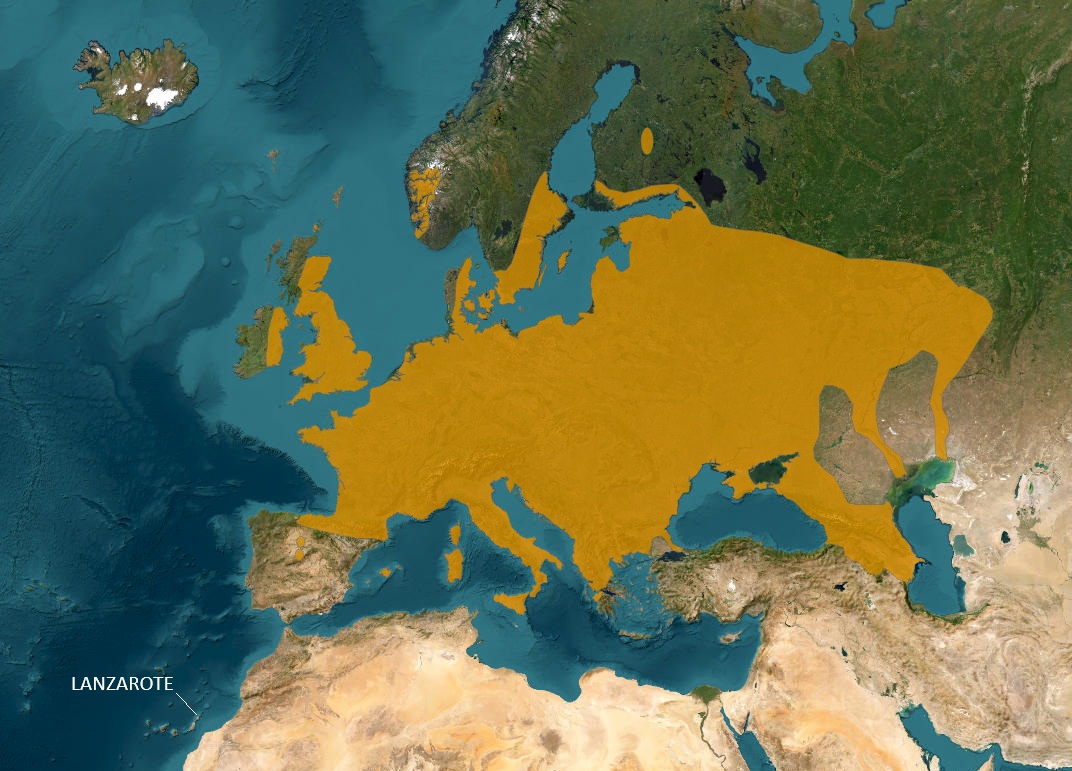
Recording the Nathusius' pipistrelle in the Canary Islands is undoubtedly an unexpected and striking event, as it is the southernmost record ever documented for this species. This is a migratory species that inhabits the European continent, ranging from Ireland and the Iberian Peninsula to the Ural Mountains and the Caucasus region.
The ship-assisted arrival hypothesis
Naturally, we believe this specimen did not reach Lanzarote under its own power; instead, we hypothesize that it may have been a ship-assisted arrival. In other words, during its NE-SW migration over the Baltic Sea, North Sea, or the English Channel, this individual likely encountered adverse weather conditions and, severely weakened, was forced to take urgent refuge on a passing ship (a freighter, tanker, ferry, or similar) that happened to be heading toward a port in the Canary Islands or passing near the archipelago. There are numerous known cases of individuals of this and other bat species (as well as birds) arriving in this manner at remote islands (Iceland, Faroe Islands, Shetland Islands, etc.) far from their natural range and main migratory corridors.
Lesser noctule: natural dispersal between islands
On the other hand, the lesser noctule is a species with a wide Eurasian distribution, but it is also present, with breeding populations, on some islands in the Macaronesian region (Madeira, Tenerife, and La Palma). Therefore, we believe the origin of the specimen recorded in Lanzarote may lie with the populations in La Palma or Tenerife, and that it is the result of dispersive movements between islands.
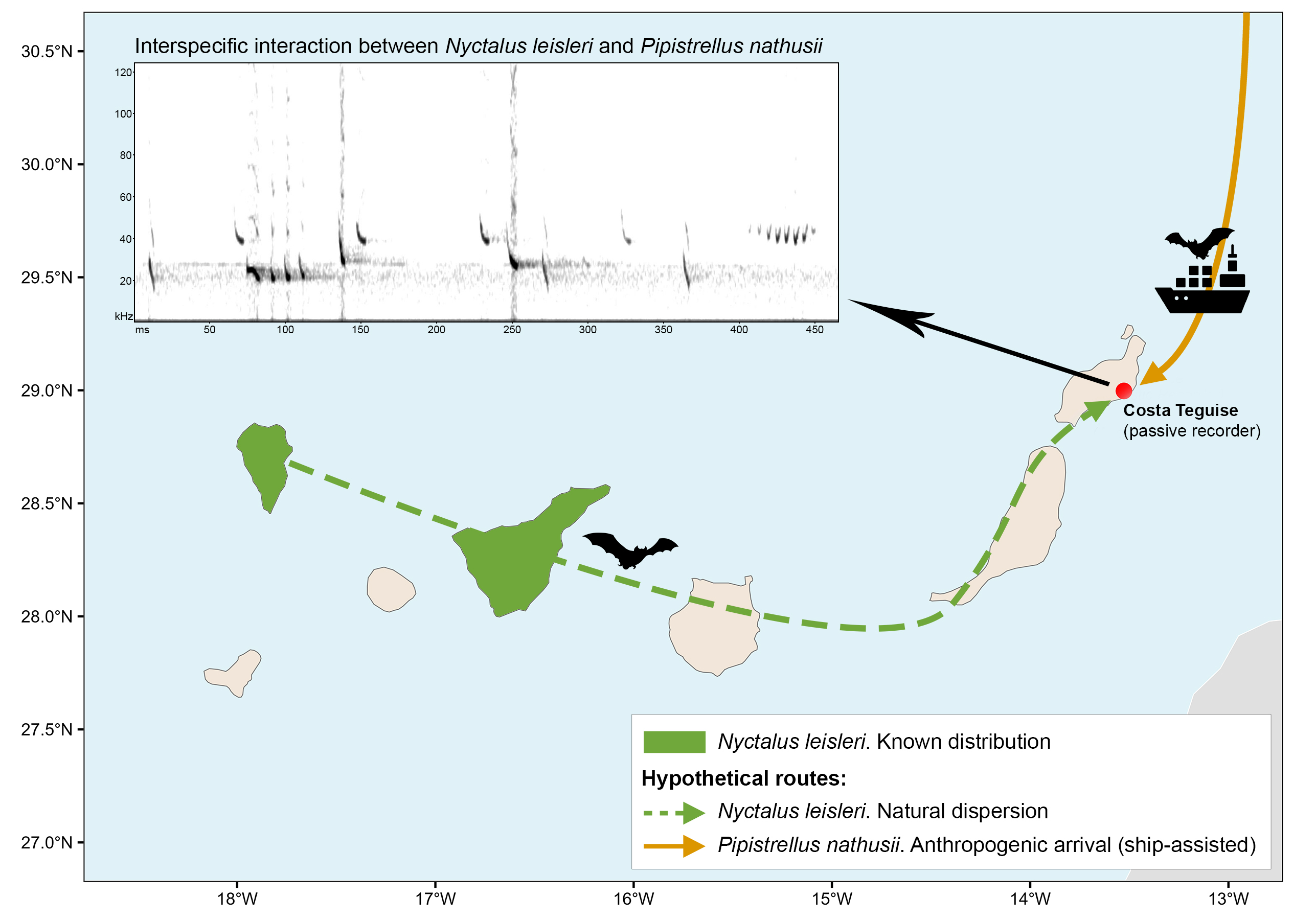
This hypothesis is supported by the fact that we have also recorded some echolocation calls of the lesser noctule on the northeast coast of the island of Gran Canaria, where the species is not known to exist. In this way, we report the second record of this species for the island of Lanzarote and confirm the occasional presence of lesser noctule individuals on the island, where a previous record occurred in 1997 involving a specimen found in a very weakened state on the northeast coast.
New knowledge gaps to fill
These extraordinary records from Lanzarote highlight the significant gaps that still persist today in our knowledge of bats in the Canary Islands. Furthermore, they demonstrate that Corporate Social Responsibility (CSR) initiatives like the one we are carrying out in the Canary Islands can generate highly valuable knowledge about the bat fauna of an island where research into this taxonomic group has been limited and insufficient over the last few decades. Our intention is to continue researching on this and other islands of the archipelago to contribute even more to the understanding of this wonderful group of animals in our beloved Fortunate Isles.
Reliable identification of species such as the Nathusius' pipistrelle or the lesser noctule depends, to a large extent, on the rigor applied to the analysis of their echolocation and social calls. To learn about the technical criteria and the most common errors in this type of acoustic identification, you can consult the Manual for the acoustic identification of Iberian bats.
Sources: Ideas medioambientales, Shutterstock.
.jpeg)
.avif)


.jpeg)


