
.avif)


How to help reduce noise pollution during the construction phase of a project
Every reward requires certain sacrifices. If we aspire to a sustainable energy model, we must accept that its deployment involves some temporary inconveniences. One of the most significant is the noise emissions resulting from the use of heavy machinery during the construction of wind farms, photovoltaic plants, or battery energy storage systems (BESS).
The operation of this machinery generates considerable noise levels that can affect the tranquility of the natural environment where these projects are located or, in very specific cases, nearby inhabited areas. Therefore, to help minimize these impacts, it is important to precisely identify the types of emission sources involved in each project.
THE USUAL SUSPECTS
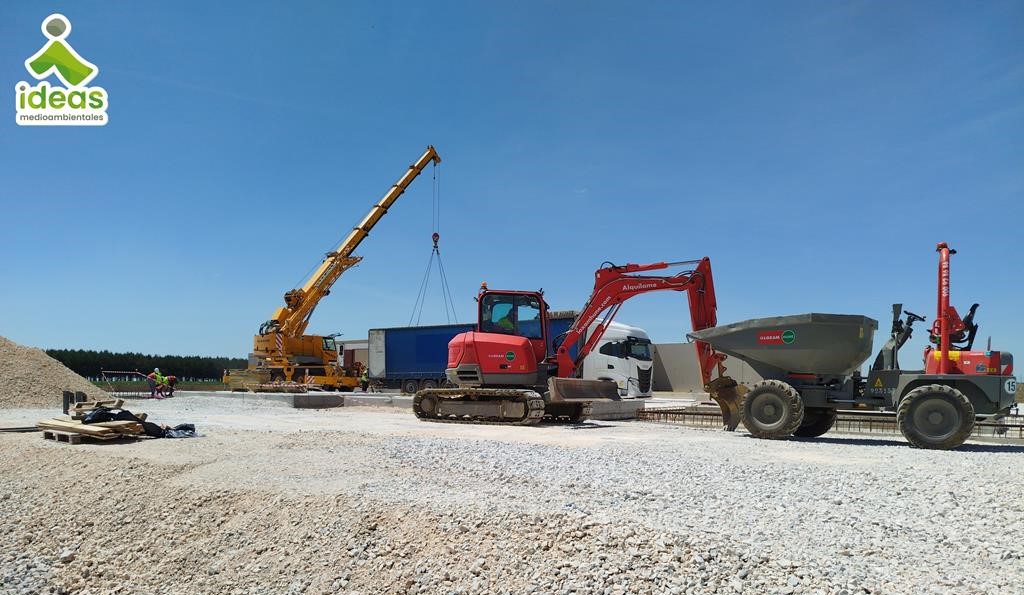
As with any construction site, the machinery most commonly used when building projects of this type includes:
• Backhoe loaders
• Excavators (tracked and wheeled)
• Trucks (dump trucks, tractor units with semi-trailers, rigid trucks, boom trucks, concrete mixers)
• Compact machinery (skid-steer loaders, mini-excavators, dumpers)
• Telehandlers
• Tractors (which can be equipped with various attachments for stone clearing, earthmoving, planting, etc.)
Beyond the frequency with which these machines appear on construction sites, there are specific circumstances worth noting depending on the situation.
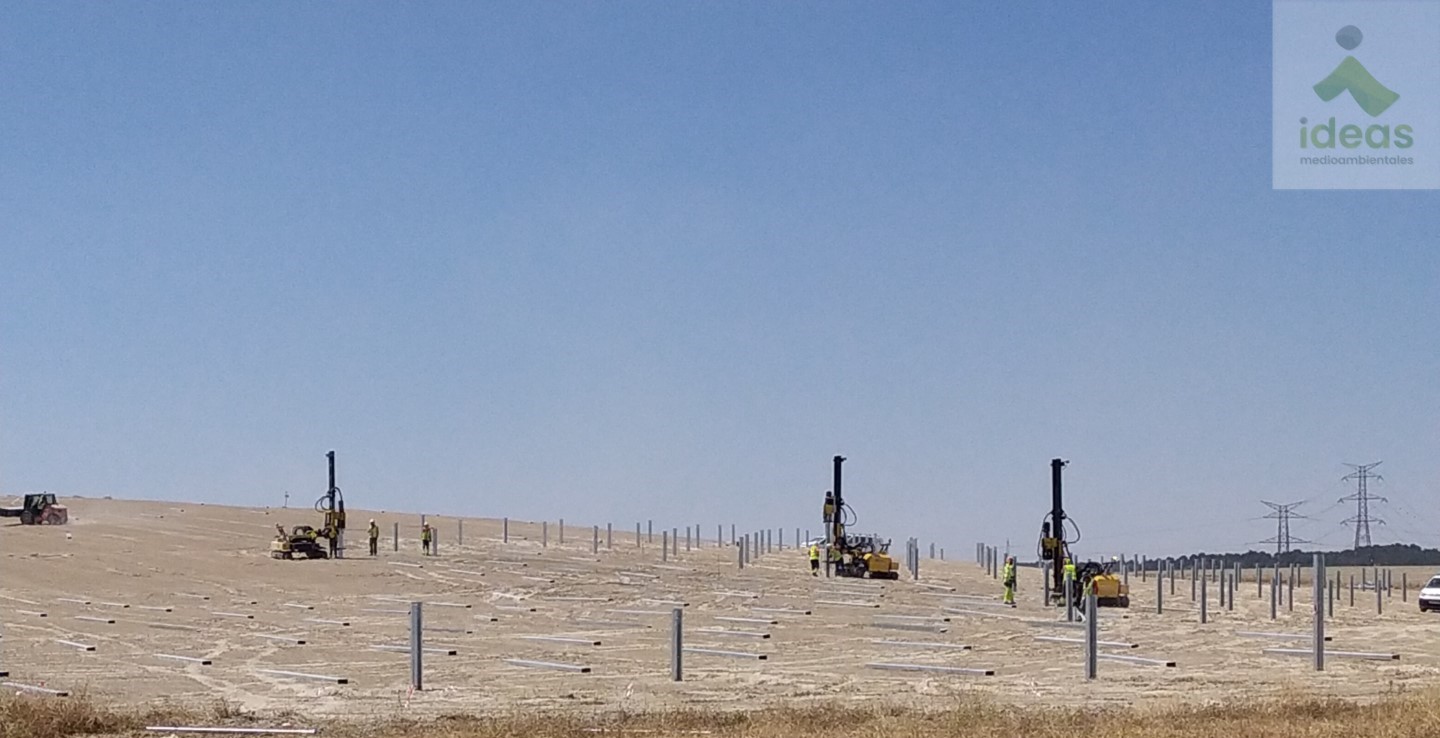
In the case of solar plant construction, the use of pile drivers to install the support posts for the photovoltaic module structures stands out. This machine, which has a particularly high noise emission, produces a penetrating rhythmic sound that can be heard from a considerable distance, although it is also a versatile machine that can be equipped with augers for added functionality when hole-drilling work is required.
Another type of machinery also widely used in these types of projects includes multiple types of cranes, among which you can find:
• Mobile telescopic cranes
• Truck-mounted articulated cranes
• Boom cranes
• Scissor lifts
They are typically used for loading and unloading tasks, but their application in construction is adapted to the needs of each project. In wind farms, larger and more powerful models must be used, such as mobile telescopic cranes (also necessary for positioning battery containers) or lattice boom cranes. For transformer substations and power lines, boom cranes or scissor lifts are frequently used for specific tasks at height.
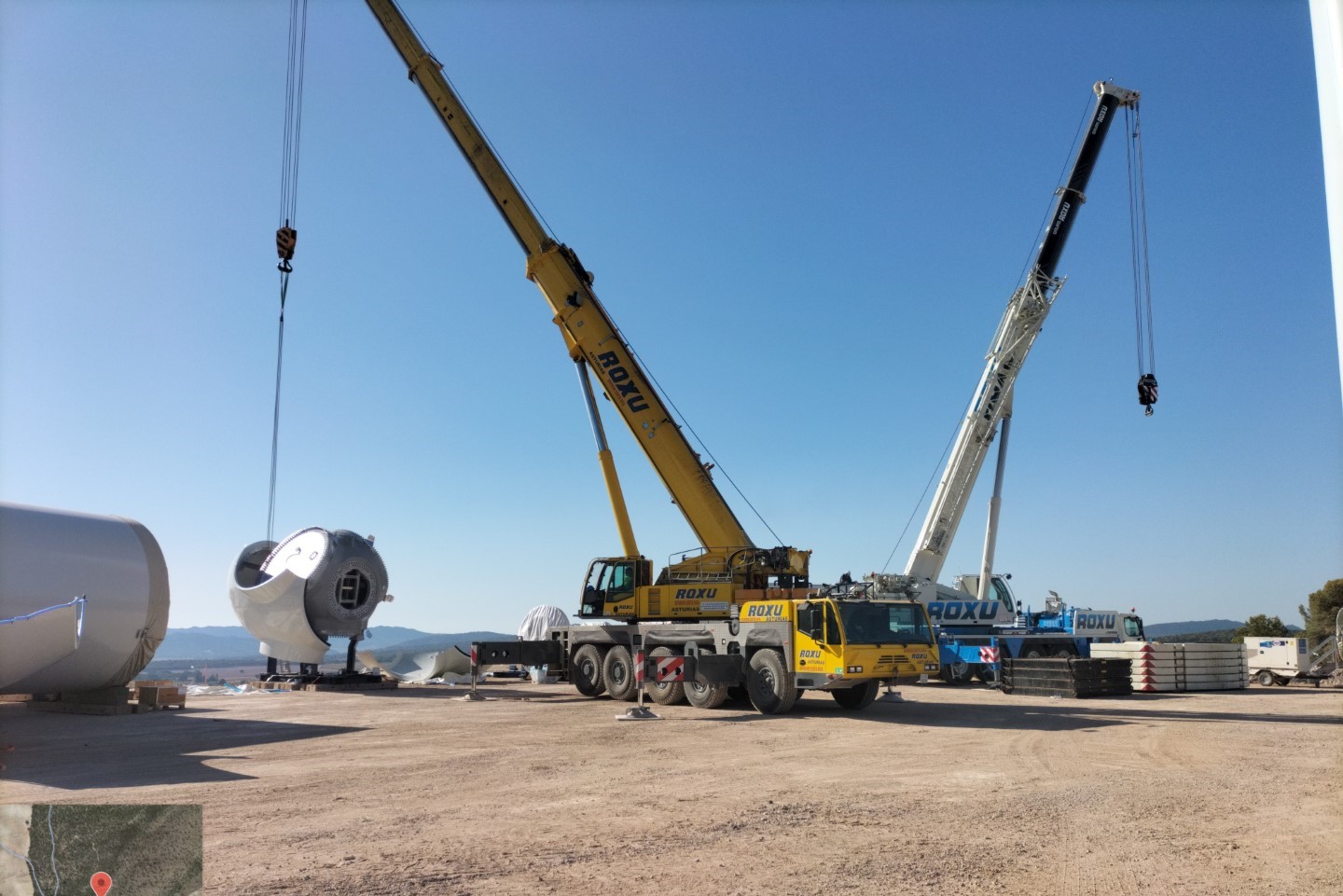
This machinery is also frequently used during the repowering of older wind farms that have reached the end of their service life. In these cases, identifying the potential acoustic impact caused by these machines becomes even more important.
When creating new access roads or support infrastructure for a project, machinery such as motor graders, rollers, bulldozers, or loaders is also used, depending on the earthmoving requirements.
NOISE WITH A LABEL: THE IMPORTANCE OF ACOUSTIC MARKINGS
Most of these machines, often featuring high power and combustion engines, are sources of very high noise levels. While these levels depend on the specific model used, they generally range between 95 and 115 dB(A).
This fact is reflected on each machine through this identifier:

This is a plate that displays the guaranteed sound power level, or LWA, expressed in dB. This figure indicates the maximum amount of acoustic energy the machine can emit under the working conditions in which it operates.
By regulation (Royal Decree 212/2002 of February 22), all outdoor equipment must carry this visible, legible, and indelible identification. The marking itself is regulated by this law, in addition to other considerations reflected in acoustic regulations such as Royal Decree 1367/2007 of October 19, which develops Law 37/2003 of November 17 on Noise, regarding acoustic zoning, quality objectives, and acoustic emissions.
Therefore, using machinery with lower maximum sound pressure values during the construction phase of a project is a necessary preventive measure to avoid noise impact in the work environment, thereby helping to comply with the levels established in current legislation to maintain adequate acoustic quality in the area where these activities take place.
FEWER DECIBELS, BETTER RESULTS
Ultimately, the construction of infrastructure related to renewable energy projects does not have to be an unavoidable noise nuisance. Controlling generated acoustic emissions is, today, another indicator of the efficiency and quality of a project.
Managing acoustic impact with technical rigor not only protects the environment but also ensures the social success of the energy transition. At Ideas medioambientales, we can document this management through the technical justification of a project's acoustic viability throughout its various phases, as we have the experience and the necessary tools to do so.
So, if you want to ensure your project moves forward without surprises regarding acoustic impact on your project's surroundings, take the next step and consult us with no obligation.
Francisco García Saucedo and Luis Monteagudo Martínez, Forestry Engineers
Keywords: Acoustic emissions, machinery, environmental impact assessment, renewable energy, wind farms, photovoltaic plants

.avif)
.jpeg)

.jpeg)


