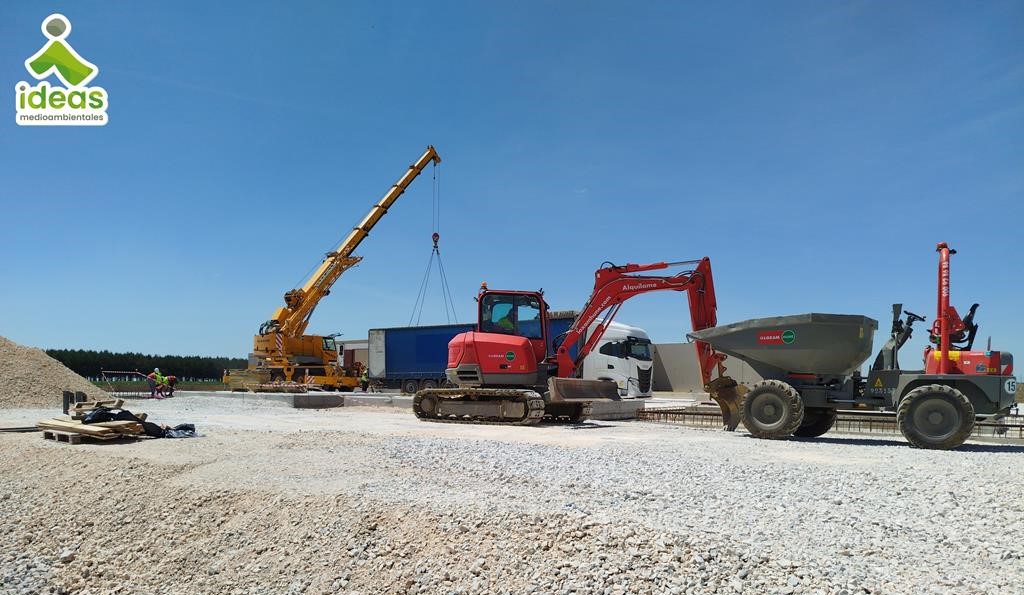
.avif)

Summer is here, and with it comes an annual problem: wildfires. We know that fires have always existed—we aren't denying that—but they are now occurring more frequently and tend to be more aggressive.
In environmental monitoring, particularly for renewable energy projects under construction, the summer season is a critical period to consider. Any monitor who hasn't had to debate this issue, raise your hand!
Why is it so critical and problematic?
We are all aware of the dangers a forest fire poses to a solar photovoltaic plant, a high-voltage power line, or a wind farm:
- Loss of vegetation
- Loss of wildlife habitat areas
- Soil degradation due to the loss of ground cover
- Risk to workers
- Delays in schedules and production
While no one wants a fire on their project record, there is often resistance to implementing strict measures. Heatwaves can bring work to a standstill, which also means financial delays.
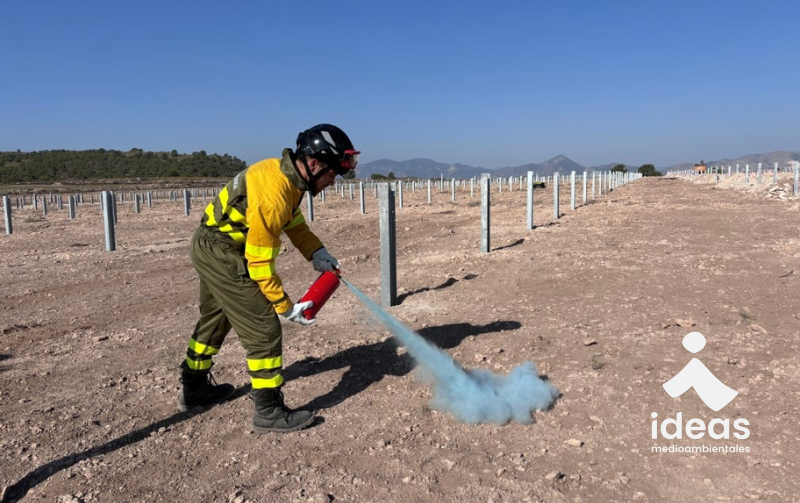
Administrative authorizations: the mandatory first step
First and foremost, in regions where it is required, you must request authorization for work during the forest fire season from the competent authority. As a general rule, this applies to all projects with facilities located within 400 meters of the nearest forested area. Nowadays, it is rare for a project not to be in this situation.
While waiting for the specific authorization and project conditions, it is advisable to implement preventive measures that involve everyone from the developer down to the last subcontractor.
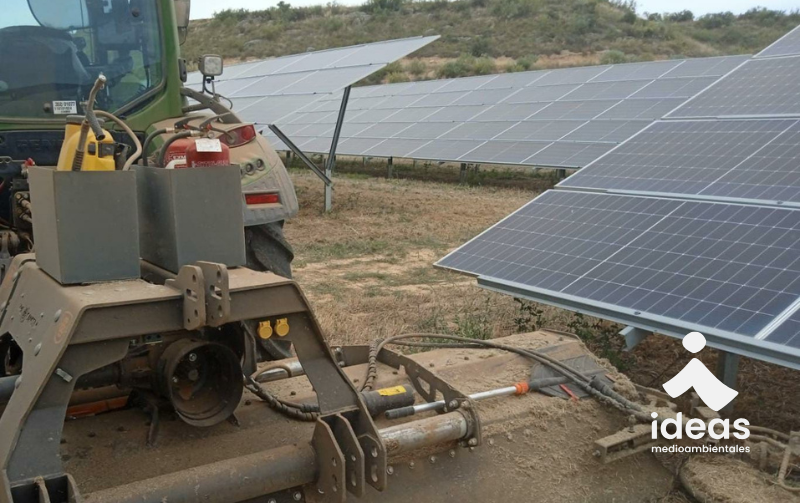
Preventive measures while awaiting authorization
Based on the experience of the environmental monitoring team at Ideas Medioambientales, the following best practices are recommended:
- Keep work areas and material storage sites free of debris.
- Park machinery in areas free of vegetation, cleared for a radius of at least 10 meters.
- Use spark arrestors on combustion engines.
- Do not use angle grinders or welding equipment in areas that have not been cleared of plant-based fuel.
- Implement a general ban on smoking at the work site.
- Refuel tanks and generators only when cool, away from smoking areas, and in designated safe zones.
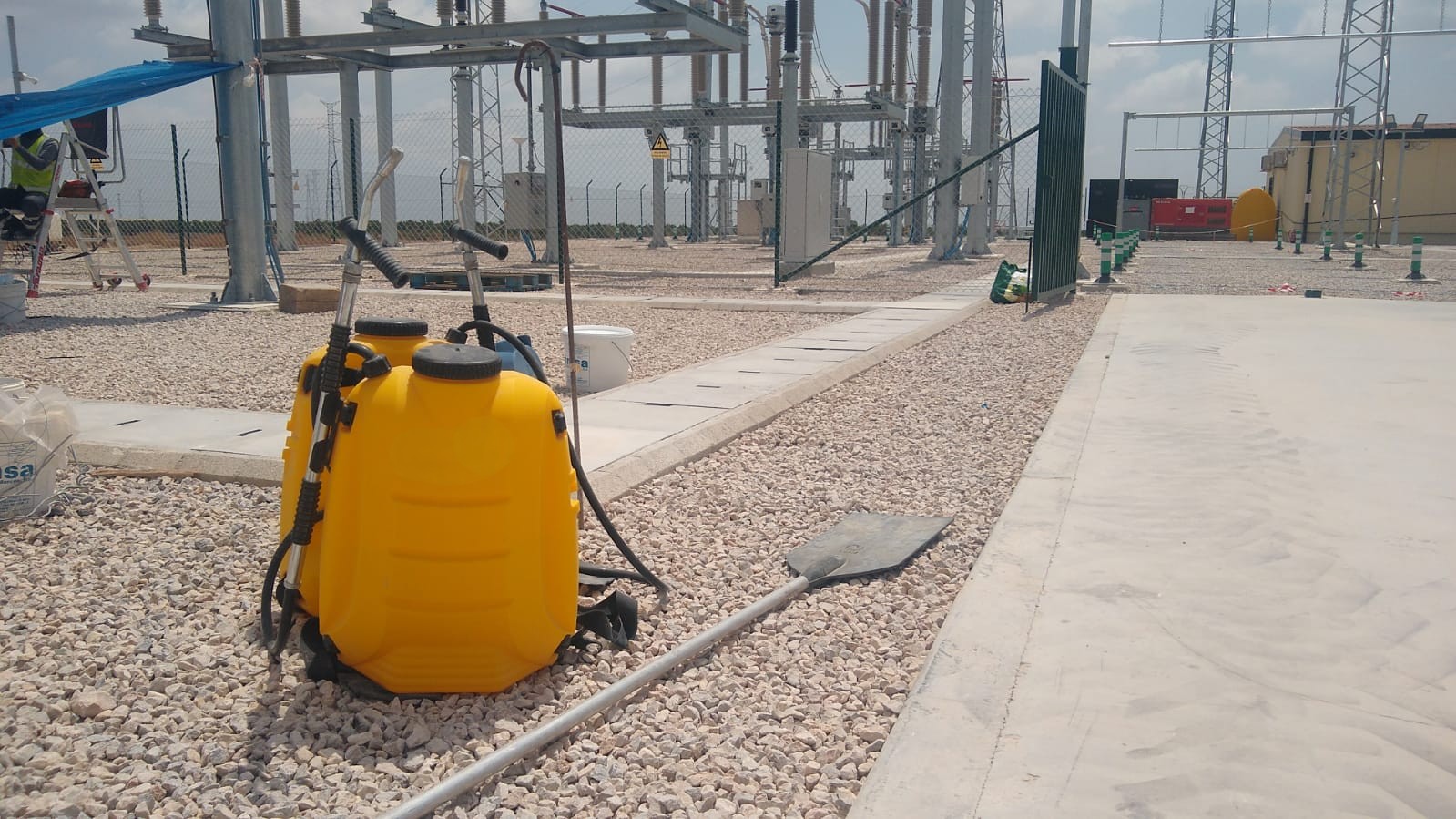
- Equip all vehicles and machinery with ABC fire extinguishers. It is even better to include backpack fire extinguishers and fire swatters.
- Avoid working during the hottest hours of the day.
Rapid response: an innovative measure gaining ground
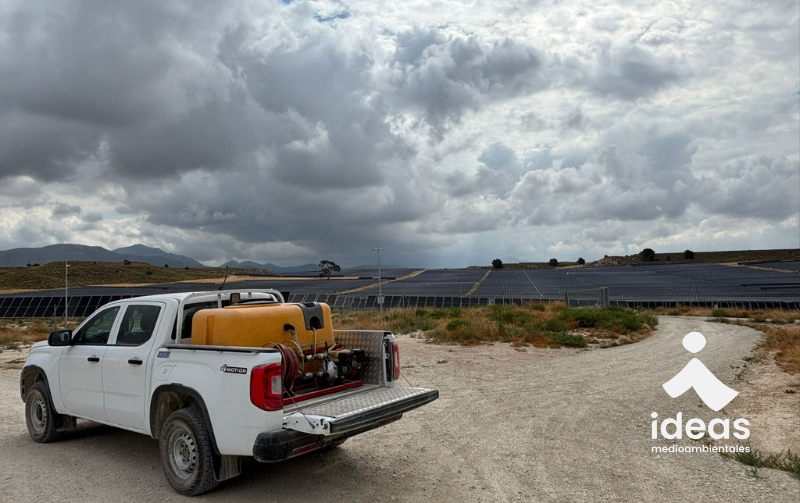
As a new development, many projects are now implementing an effective solution: having a rapid-response fire suppression unit mounted on a pickup truck, with a minimum capacity of 1,000 liters, hoses with a reach of at least 100 meters, and trained personnel (such as private firefighters).
Conclusion: prevention saves time and protects the environment
Just as with health, environmental prevention is possible and highly effective. Implementing these measures reduces human, ecological, and economic risks in projects that are strategic for the country's energy transition and infrastructure.

.avif)
.jpeg)