.avif)

How Dogs Are Transforming Environmental Conservation and Beyond
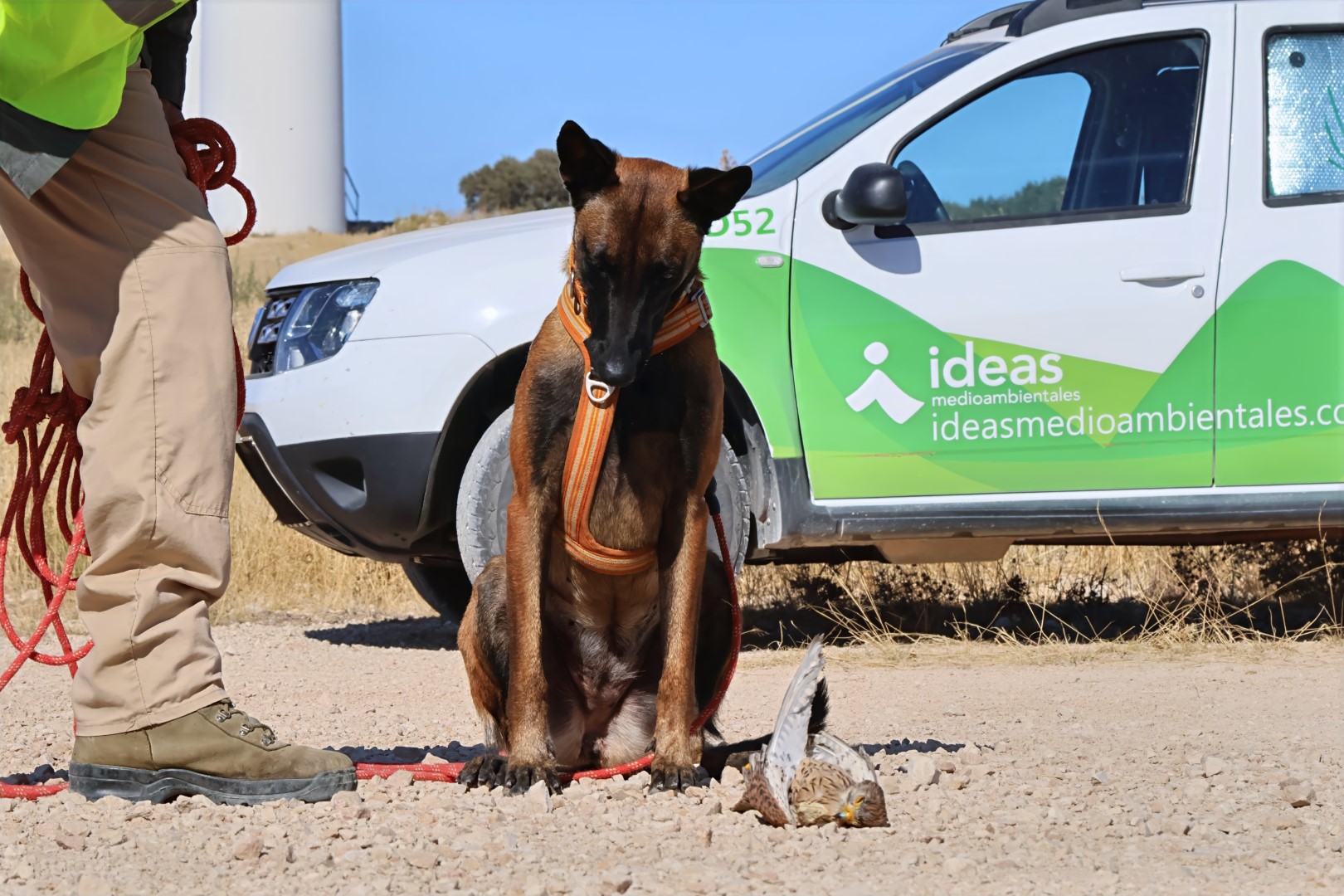
On a planet where biodiversity faces constant threats, dogs have emerged as allies in environmental conservation for over a century. Due to their incredible detection capabilities, these teams, consisting of a dog and a handler, play a crucial role that deserves recognition. In addition to their use in detecting wildlife carcasses resulting from infrastructure accidents, dogs can provide high-value work in other areas of biodiversity conservation, such as combating illegal wildlife trade and poaching, or, as currently demonstrated, in wildlife health crisis situations like avian flu or African swine fever.
Dogs for the Environment: an innovative approach
Today, two trained dogs and their respective handler-technicians are part of the Biocan Utilityproject, which Ideas Medioambientales began during the first decade of the 2000s, providing scientific evidence for how researchers approach wildlife conservation. We currently collaborate with other top-tier dog-handler teams to cover the entire peninsula. Using their keen sense of smell, these dogs are able to locate carcasses of various species with extraordinary efficiency. Dogs achieve detection rates ranging from 80-90%, compared to the 10-40% effectiveness of humans. This makes them valuable tools for assessing the environmental impact of various infrastructures, from power lines to wind farms and their perimeter infrastructure in the renewable energy sector, as demonstrated by the growth of scientific literature and academic research in this field.
Training eco-detection dogs: let the game begin!
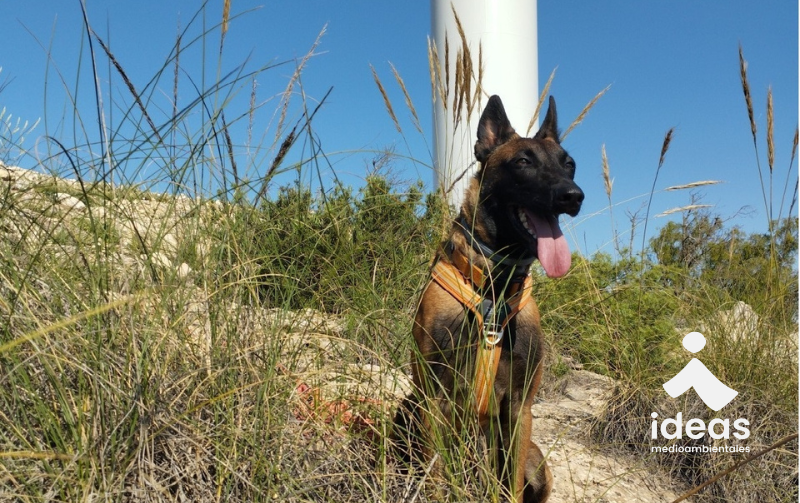
The key to the success of dogs in conservation lies in their specialized training. This process is based on positive reinforcement, where dogs are trained to signal and mark targets before being exposed to real wildlife carcasses, allowing them to recognize specific scents. This method not only increases accuracy in species identification but also allows them to operate in varied situations. A well-trained dog can effectively signal remains in different states of decomposition and in the most diverse environments, a skill that makes them particularly effective at detection. Every job well done has its reward, whether it be their favorite toy or delicious edible treats, and the care and affection from their handlers keep them motivated and focused. Their well-being is the guarantee of good results.
Environmental Impact Management: an essential role for obtaining real data
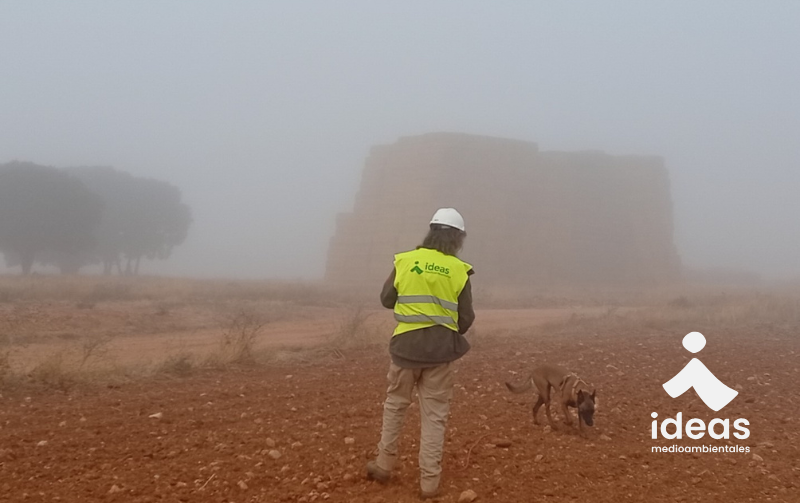
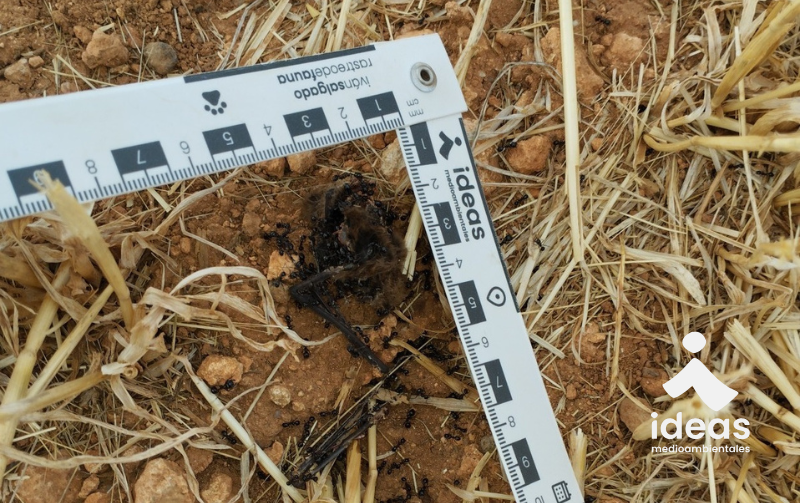
Dogs not only assist in detection, but are also fundamental for managing environmental impact accurately and realistically. Within the scope of the Biocan Utilityproject, these animals have shown an average effectiveness of 78% in locating carcasses, which is crucial for assessing the effects of infrastructure on local birdlife. From large birds of prey in highly inaccessible areas to tiny, scattered, or even partially buried remains of bats or passerines. Our teams follow field methodologies designed and recommended by leading organizations and public administrations (SECEMU.org, MITECO, eurobats.org).
Thanks to their ability to identify volatile compounds originating from the decomposition and putrefaction of remains, and to search for and mark their point of origin regardless of size, dogs contribute to the study, design, and implementation of corrective measures that minimize damage to biodiversity.
Other Applications of Dogs in Biodiversity Conservation
Dogs can do much more for biodiversity conservation than just carcass detection. Here are other fields where dogs can contribute their olfactory capacity, once target odors have been characterized:
- Invasive Species Detection: dogs can be trained to identify pathogens or invasive plants and animals, helping to mitigate their impact before they become a significant threat to local ecosystems.
- Endangered Species Tracking: they can be used to track endangered species, facilitating research into their habits and the monitoring of their populations.
- Habitat Monitoring: dogs can contribute to habitat monitoring, helping to identify changes in flora and fauna that could indicate environmental problems, such as pollution or climate change.
- Assistance in Reforestation Projects: dogs can help identify areas in need of rehabilitation, as well as locate native plant species that are vital for ecosystem restoration.
- Environmental Education: using dogs in environmental education campaigns can capture the community's attention. The dogs themselves can help raise awareness about conservation among the public, especially in programs aimed at children.
The answer is blowing in the wind
Dogs are proving to be some of the best allies in environmental conservation. Their incredible sense of smell and specialized training are transforming how we approach biodiversity challenges across the planet. As we explore their many capabilities, it is clear that their role extends far beyond simply detecting wildlife carcasses. Investing in their training and use in conservation projects is, without a doubt, a beneficial strategy for the future of our planet.
With this innovative approach, the eco-detection dogs at Ideas Medioambientales not only promote actions that save wildlife, but also show us that, sometimes, the most effective solutions come from where we least expect them.
Contact our technical or sales department if you would like to learn more about how our eco-detection dog team can participate in your projects.
.avif)
.jpeg)