.avif)
Innovation, biodiversity, and clean energy: our experience at CWW25 in Montpellier.
It has been a real pleasure to share experiences with so many industry professionals and discover the most innovative projects in the wind energy sector.
We participated in the Workshop Wildlife protection on the grid side of renewable generation, where we contributed our expertise on effective preventive measures and the response of great bustards to the construction and operation of wind farms.

This year's talks focused on 4 main pillars:
- Application of the Mitigation Hierarchy: practical cases of prevention, minimization, compensation, and restoration.
- Population and cumulative effects, including the impact of climate change.
- Effects on ecosystems and habitats, in both onshore and offshore projects.
- Specific responses of different species to wind energy projects.

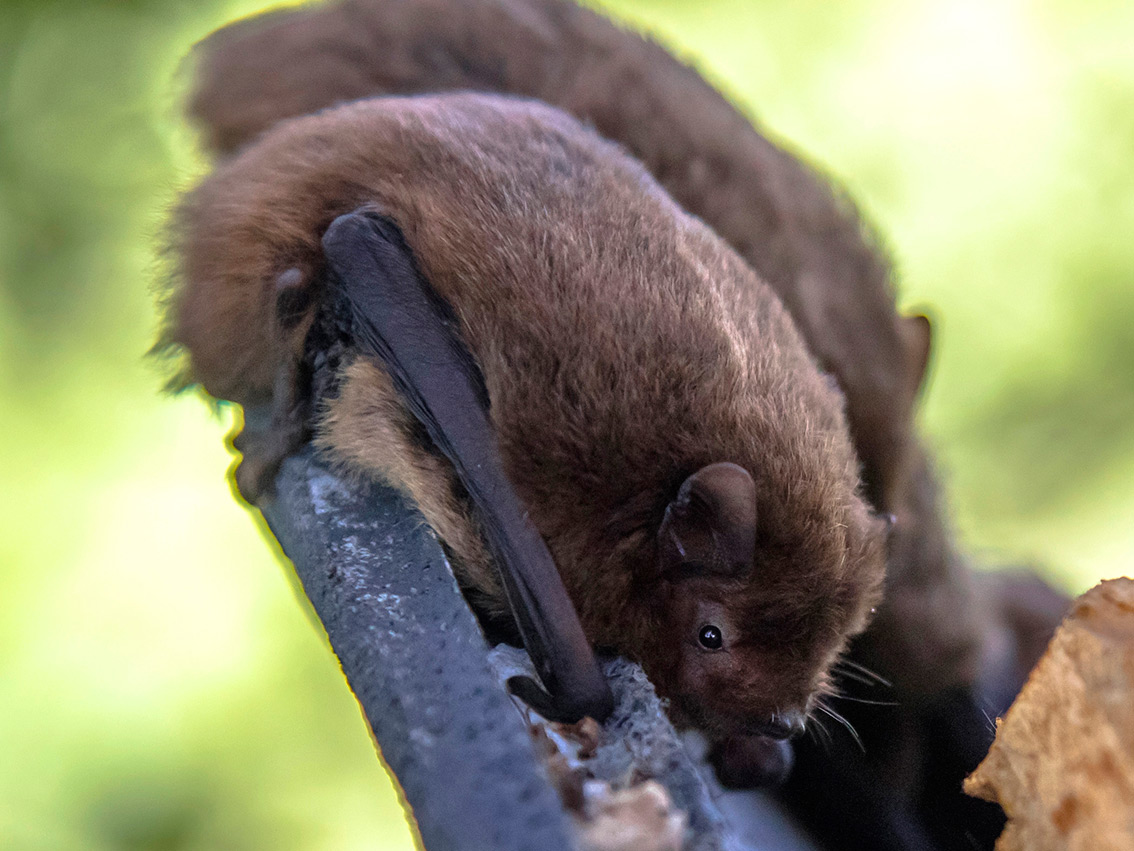
We would especially like to highlight the growing focus on the impact of wind farms on bats, a group that until recently had not been given the importance it deserves. A significant number of the presentations focused on measures to reduce their mortality, comparing different techniques such as blanket curtailment (preventive shutdowns on nights with wind speeds below 5-6 m/s during active periods) and adaptive curtailment (a flexible preventive shutdown regime based on local activity data collected from the nacelle). A major innovation in this measure is the development of technologies for shut-in-demand using ultrasonic recorders, which stop the turbine when bat activity is detected.
There has also been a significant focus on offshore wind energy, due to its exponential growth over the last decade and the limited information available regarding its impact on marine species (including birds, mammals, and fish). Several studies have been presented on the responses of different species to the same wind farm, showing behavioral heterogeneity depending on the species, the location of the farm, and the time of year.
The advances in remote sensing and shutdown systems, as well as radar technologies, are very interesting, both capable of detecting daytime and, at times, high-altitude nocturnal migratory passage, which is very useful for both on-shore and off-shore projects.

The experiences shared regarding strategies to promote environmental responsibility were also very inspiring, contributing to a more sustainable future that respects biodiversity.
This conference demonstrates how innovation and clean energy can go hand in hand for a more sustainable planet.
In addition, we presented our poster on our new proprietary tool, an Artificial Intelligence (AI) that analyzes information gathered from Environmental Impact Statements, allowing us to identify key trends during project permitting and evaluate consistency across administrations, facilitating the identification of critical points and opportunities for project improvement during environmental assessment processes.

If you would like to download the poster, click
We are already brainstorming ideas for the next congress, which will be held in Malaga in 2027!
.avif)
.jpeg)