.avif)

Regenerative grazing in solar farms: when the sun and the sheep walk together
The craft of shepherding: living memory of the Iberian landscape
We could not conceive of the history, culture, or people of this land without mentioning the humble craft of shepherding. An ancient, noble, and demanding profession that has traversed the landscape of the Iberian Peninsula for centuries. From south to north, in the heat of summer, flocks crossed drove roads and paths, seeking food through transhumance, or climbed to mountain pastures through trasterminance.
The splendor of this pastoral world arrived with the birth of the Honorable Council of the Mesta, founded by Alfonso X "The Wise" in 1273 to promote the wool trade and protect the oldest known livestock guild. Those shepherds enjoyed privileges such as exemption from military service, free transit, and grazing rights, all backed by solid legal protection that made transhumance an economic and cultural engine.
With the passage of time and the advance of intensive agriculture, a slow but steady decline began, culminating in 1836 with the abolition of the Mesta. The drove roads, once full of life, were threatened, and the shepherd's craft began to suffer obstacles, neglect, and loss of prestige. Often labeled as uneducated or illiterate, those men and women were, however, custodians of a deep, natural knowledge. Their silent disappearance left the fields barren and impoverished not only rural culture but also the ecosystems they cared for so well.
Because sheep were much more than walking wool and meat: they were seed carriers, soil regenerators, and imitators of the great herds of herbivores that once grazed the Iberian plateaus, fertilizing the land, rejuvenating the pasture, and giving life.
“Far away are those times,
far away the footsteps and the bleating,
of these animals, which, in oblivion, seem to remain.”
A new opportunity: regenerative grazing in photovoltaic plants
But not all is lost. In this world of climate urgency and energy transitions, a window of hope appears for the weary pastoral world. Regenerative grazing in photovoltaic plants it not only addresses a technical need but also opens the door to a reconciliation between tradition and modernity.
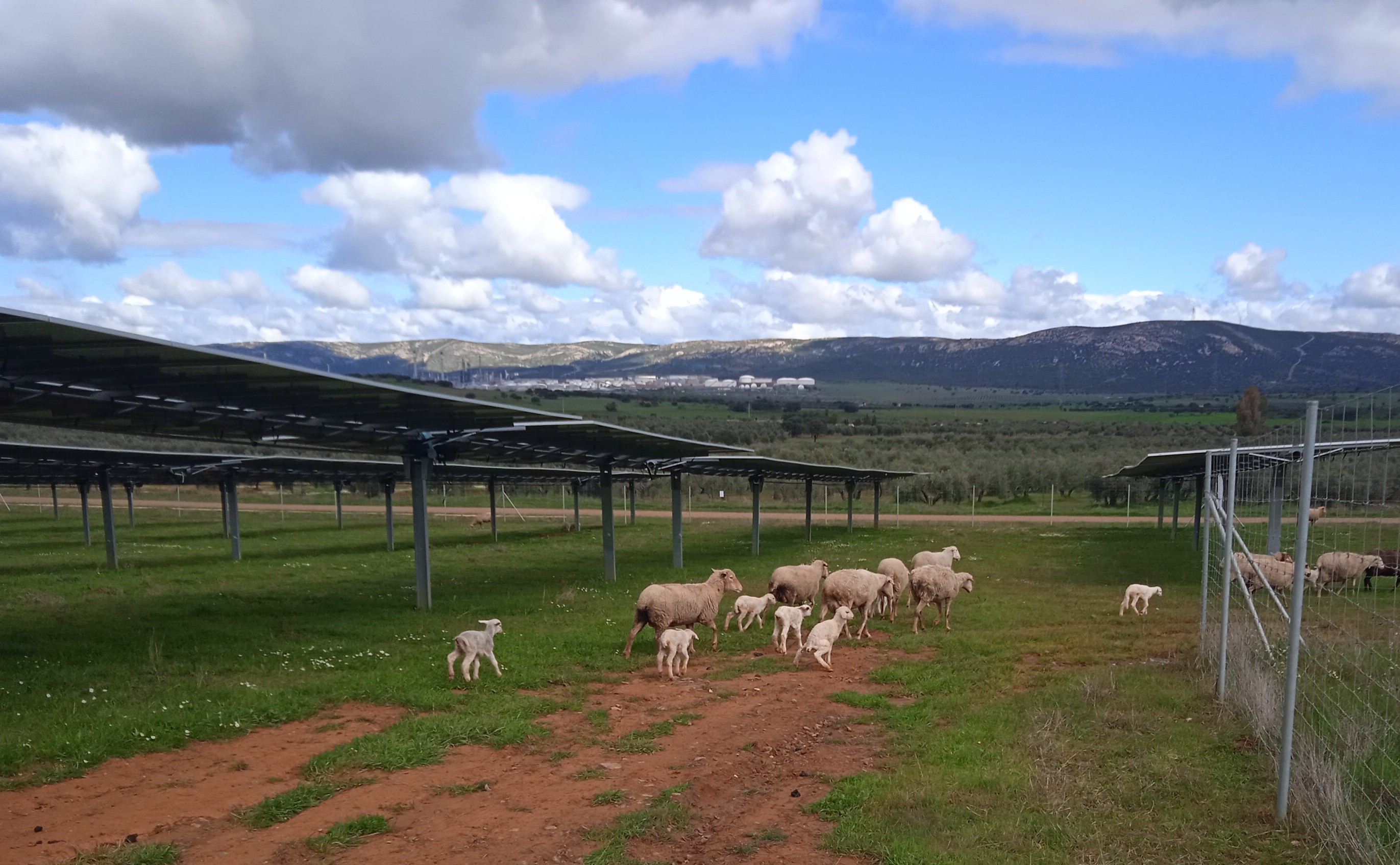
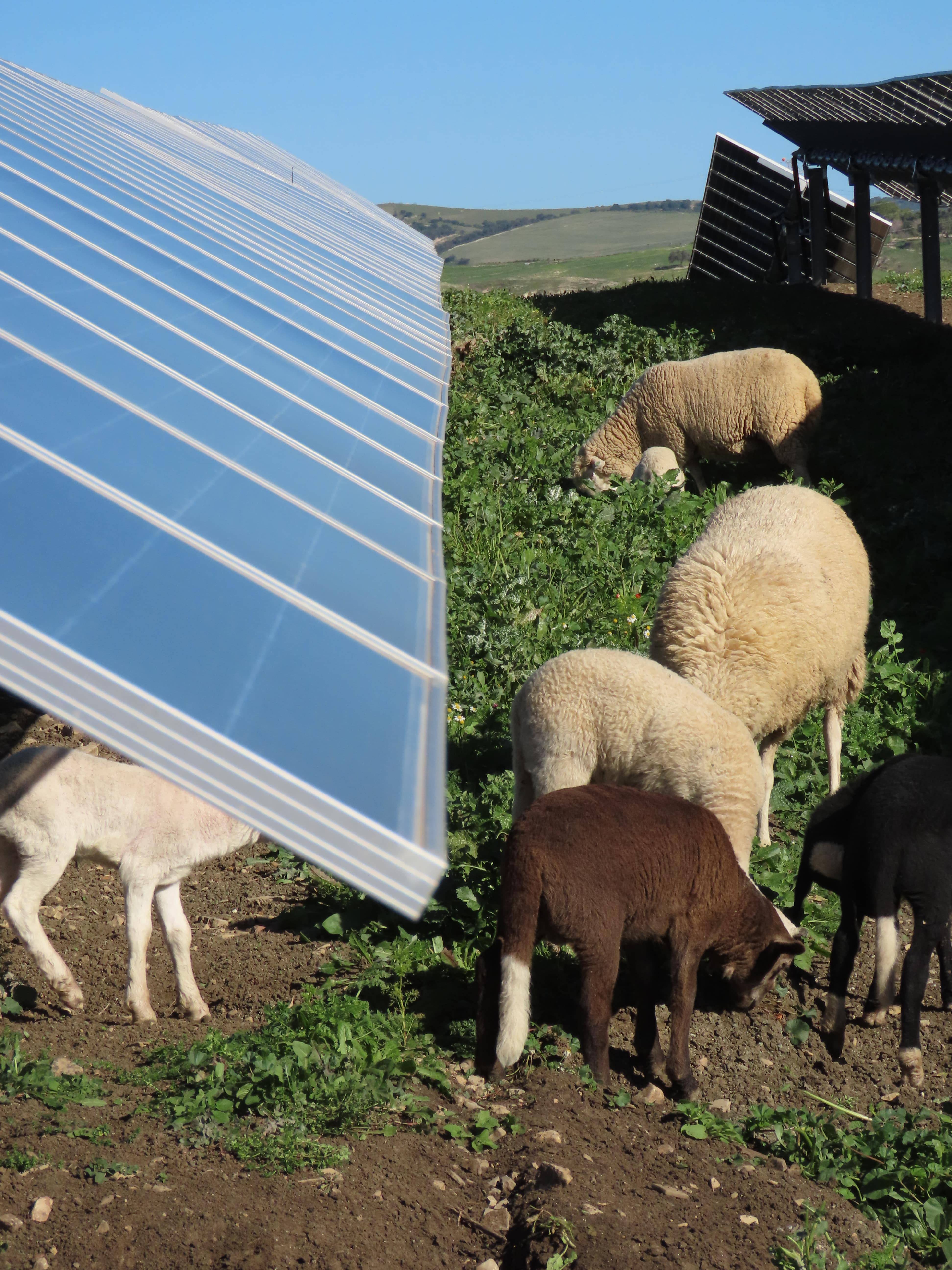
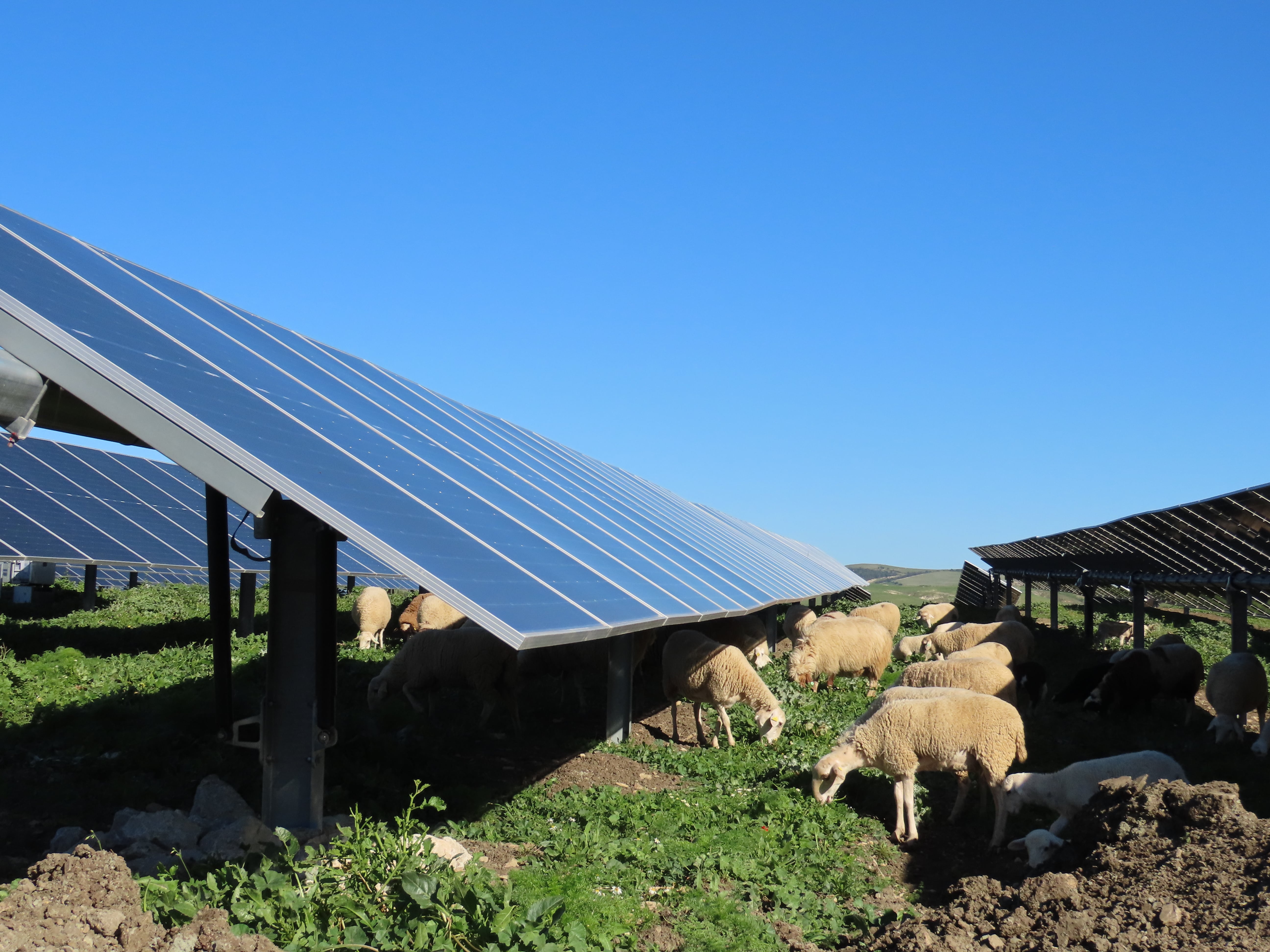
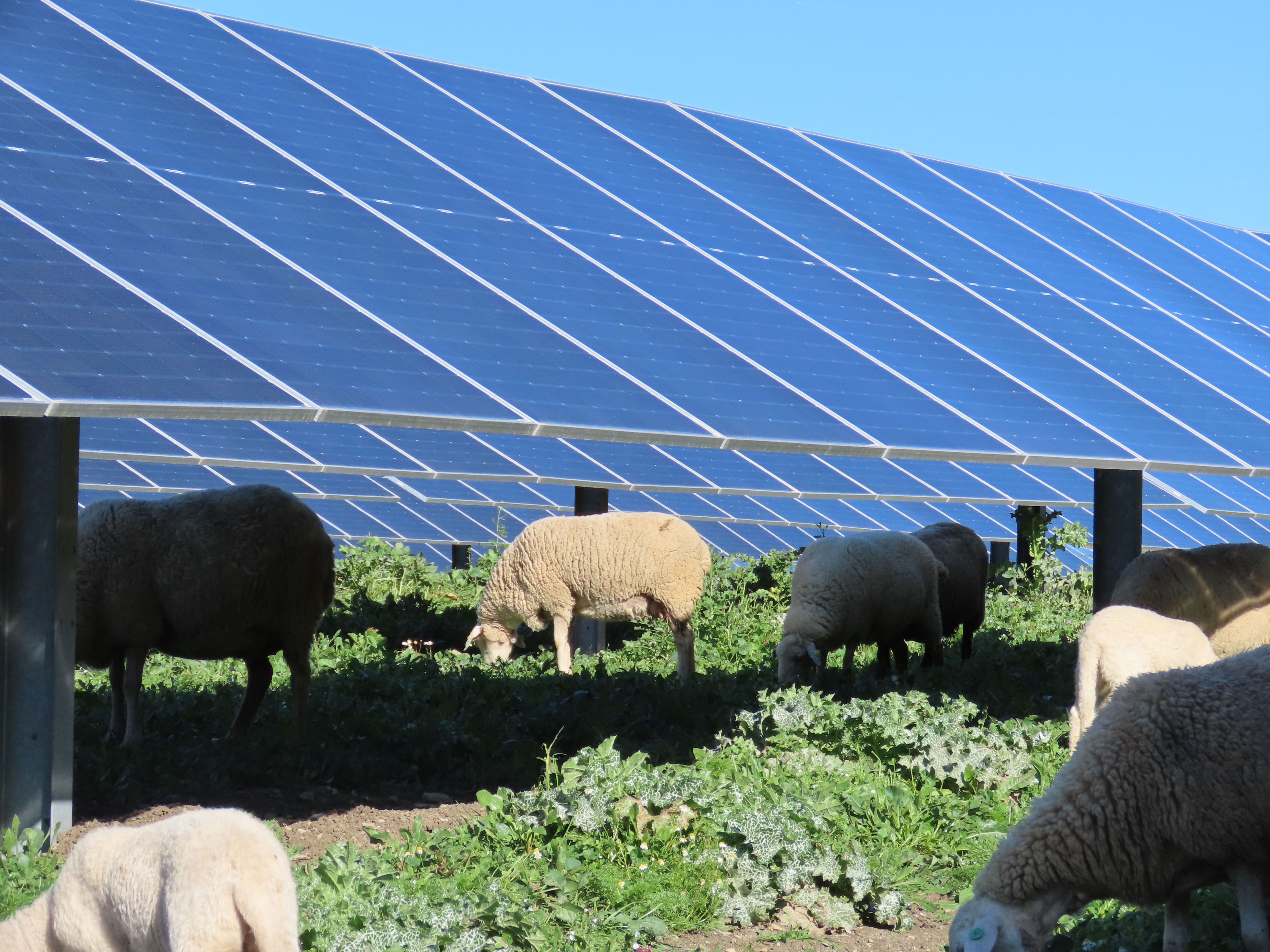
Solar installations, while necessary, can be invasive if not managed wisely. They can host a second life beneath their panels: that of herds which, when well-managed, become allies of the land. Through controlled sheep grazing, it is possible to carry out vegetation management without resorting to heavy machinery or herbicides, reducing emissions, conserving soil, and enriching biodiversity.
At Ideas Medioambientales, we promote studies and livestock management plans adapted for photovoltaic plants, based on the calculation of stocking rates or carrying capacity. This tool allows us to properly size the number of sheep according to the available forage and establish a balance between conservation and land use.
Rotational grazing: regenerating, not just maintaining
The system we apply is regenerative rotational grazing. We divide the area into smaller, mobile paddocks using electric fencing. The livestock remains in each zone for a short time (between one and three days), followed by long rest periods that allow the pasture to regenerate.
This offers us multiple advantages:
- The use of machinery is avoided, reducing soil compaction.
- Vegetation cover is improved and protected against erosion.
- The recovery of native herbaceous species is encouraged.
- Fire risk is reduced by eliminating excess dry biomass.
- And most importantly, the soil is regenerated.
This system does, however, require prior design adapted to the solar plant's topography, taking into account the microclimates created by the panels and selecting sheep breeds well-suited to these conditions.
Schedule and monitoring: smart grazing
All good management starts with planning. We create annual grazing schedules, detailing month-by-month rotations, rest periods, times to reinforce seeding if necessary, and maintenance tasks for watering troughs or pens.
Special attention should be paid to the summer dormancy period, that essential rest we give the soil when the heat intensifies. Leaving it ungrazed during this time allows the pasture to regenerate and keeps the seed bank alive.
Conclusion: looking back to the shepherd
The regenerative grazing in photovoltaic plants represents much more than a vegetation maintenance technique: it is a way to reconcile ourselves with the countryside, to restore dignity to a forgotten trade, and to ensure that sheep, shepherds, and the sun walk the same path once again.
At Ideas Medioambientales we are convinced that another model is possible: one where energy does not devastate the land, but regenerates it. Where the shepherd is not a figure of the past, but an active part of the future. If you are designing a photovoltaic project or need to improve vegetation management at your plant, we would be delighted to help you make it happen.
.avif)
.jpeg)