.avif)

We examine the relationship between archaeology and other disciplines to reach its full potential
It is well known that archaeology is a science that studies past societies through their material remains. However, the situation has evolved significantly since the days of pre-scientific archaeology, which was linked to the collecting of antiquities and the almost exclusive study of the most representative monuments of Mediterranean cultures (Greece, Rome, Egypt, and the Near East).
Today, archaeology draws on many other sciences that help enrich the conclusions drawn from past evidence, making it an interdisciplinaryscience. In fact, there is a wide range of scientific disciplines whose names reflect this duality: geoarchaeology, archaeobotany, archaeozoology, architectural archaeology, and so on.
Geoarchaeology and the analysis of the physical environment
Geoarchaeology reflects the interaction between geology and archaeology. The Harris matrix, the most widely used method of stratigraphic analysis in archaeology, is based directly on geology. This science also helps us understand post-depositional processes—that is, how sites are formed after the human groups that occupied them have left, whether voluntarily or not. To this end, soil types can be studied. Analyzing the sources of raw materials is a way to determine valuable data regarding the origin of resources.
Archaeobotany: the study of past flora
Archaeobotany offers another way to approach the landscape of the past, in this case through its flora. The microscopic study of charcoal (anthracology), seeds (carpology), and pollen (palynology) obtained from the archaeological record provides data on vegetation, including both the agricultural resources exploited by a society and the types of plants that populated the area around the site. Interestingly, the presence of plants that grow at specific times of the year has made it possible to characterize the seasonal use of some archaeological sites.
Archaeozoology and the analysis of fauna
Archaeozoology does for fauna what archaeobotany does for flora. Bones, generally the only element that survives after an animal's carcass decomposes, are a primary resource for understanding the livestock of our ancestors. But that is not all. The sequential record of bone remains of the same species over time helps us understand their evolution. The presence of exotic items, such as elephant tusks or ostrich eggs, provides insight into trade with other cultures. In specific contexts, such as the elephantid bone remains from the late 3rd century BC on the Iberian Peninsula, it has been linked to the use of these animals in the Carthaginian armies commanded by Hannibal in his struggle against Rome.
Physical anthropology and the study of human beings
Although biologically humans are still animals, their complexity is such that it has led to the development of an independent branch of knowledge. This is physical anthropology. The study of human bones provides a wealth of information: from an individual's sex or approximate age at death to pathologies that, in addition to causing their death, can reveal details about their lifestyle. For example, continuous grinding tasks left permanent marks on the lower skeleton (especially the kneecap, but also the femur, tibia, talus, or phalanges) of the person performing the work. Teeth also deserve special mention, as they make it possible, among other things, to obtain information about diet.

History and written sources
Naturally, history is one of the most important sciences related to archaeology. From the Iron Age onwards, the analysis of written sources becomes a primary resource for understanding past societies. However, the subjectivity of these sources, especially when they may have a partisan interest (wars, reigns, biographies, etc.), means they must be analyzed with caution.
Archaeology of architecture
The archaeology of architecture (which was already the subject of this article) allows for the study of architectural materials. It uses a stratigraphic methodology similar to the Harris matrix, but applies it to standing wall surfaces.
Archaeometry and the scientific analysis of materials
The Archaeometry is based on the application of physical and chemical procedures to archaeological materials. These procedures allow for various objectives to be met: material dating (thermoluminescence, carbon-14, paleomagnetism), provenance determination (strontium isotopes for humans and animals, X-ray diffraction for inorganic remains), and characterization (also X-ray diffraction for inorganic remains, and Raman spectroscopy) are just a few of the goals and techniques of a constantly evolving discipline.
Archaeology and new technologies
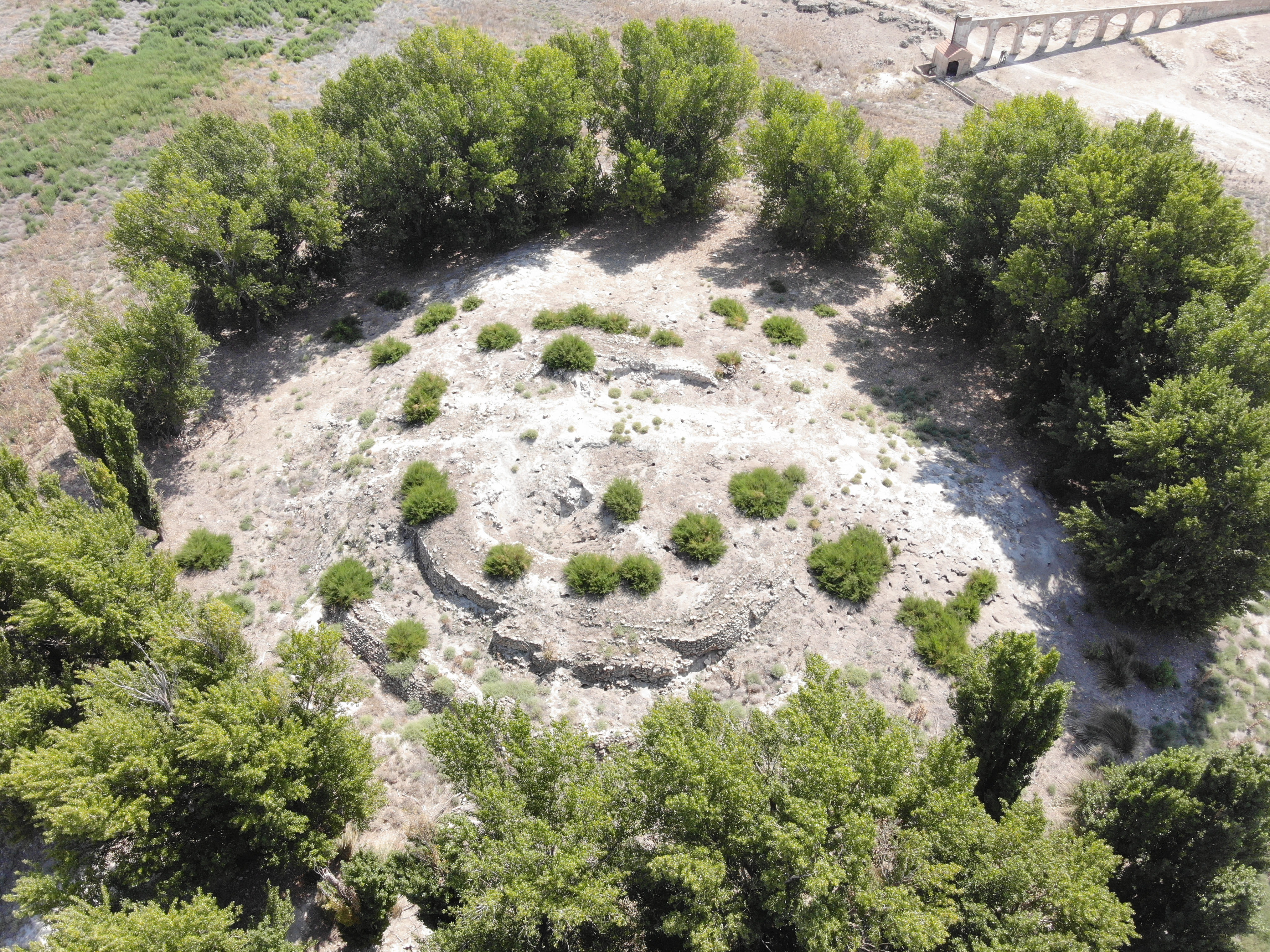
When discussing evolution, we cannot conclude without addressing the relationship between archaeology and technology, or as it is also known, computational archaeology. There are increasingly more methods that allow us to approach archaeological reality without the need for excavation. Geophysical prospecting provides an approximation of a site's structures. Within this field, we can distinguish between ground-penetrating radar (GPR), which yields a fairly precise planimetric map of the site in question, and magnetometry, which, being faster, can cover larger distances than GPR but does not offer the same level of precision. GIS is essential today for developing any territorial analysis. LiDAR, which maps terrain using a pulsed laser beam, is suitable for uncovering sites hidden primarily by vegetation. The use of drone photography greatly facilitates the overall interpretation of sites. There are also programs for statistical analysis, 3D analysis, and even laser-based drawing of archaeological material, one of the services we offer at Ideas. And we must not forget AI, which will provide unexpected applications in the field of archaeology.
These lines, which by their very nature will always remain unfinished, are merely intended to provide a quick sketch of a science that long ago stopped valuing only the materialism of the object found, and instead, by relying on other disciplines, analyzes the complexity of the relationships established between human groups and their environment.


.avif)
.jpeg)