.avif)

Causes and solutions for a growing problem.
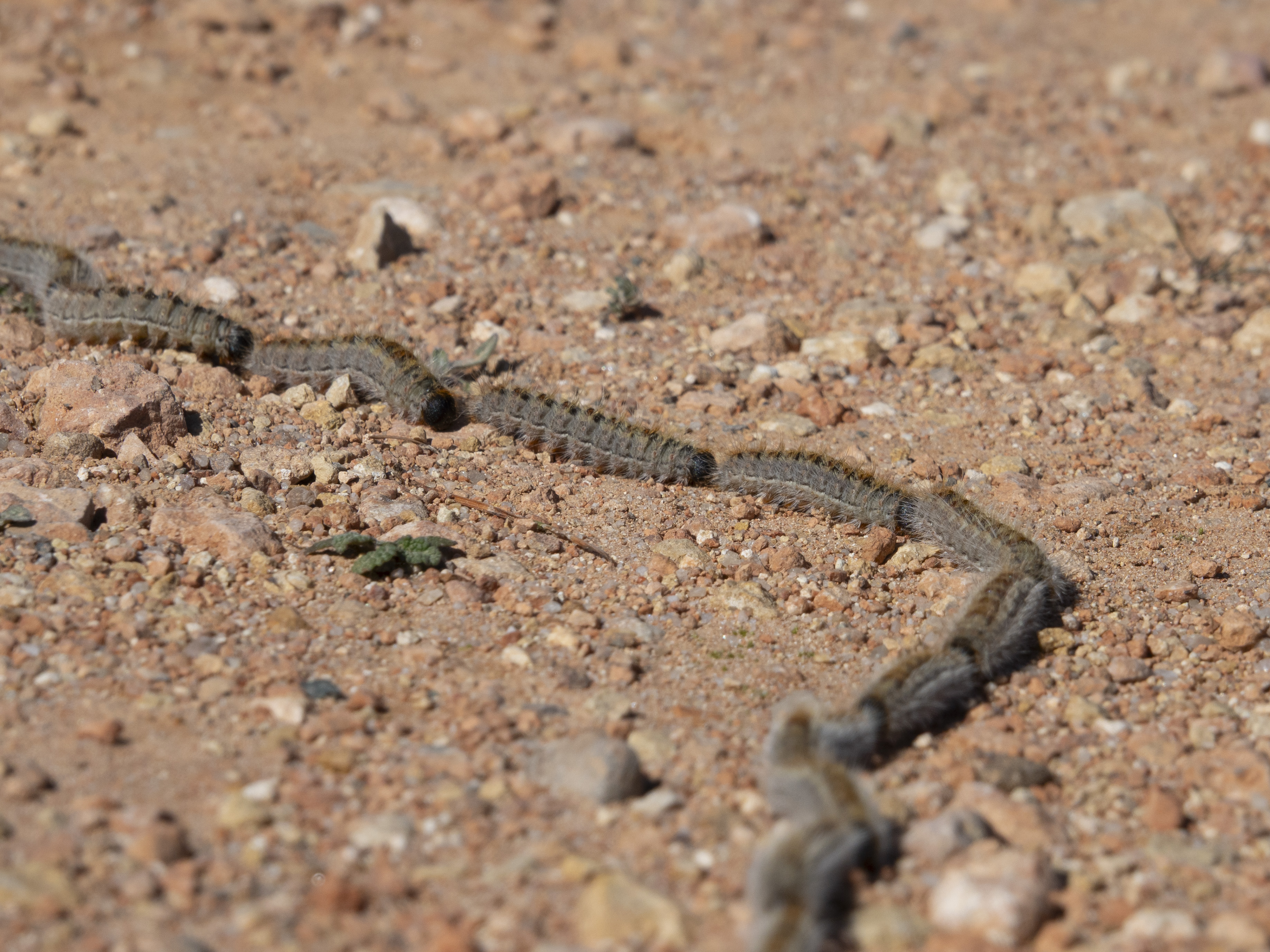
The caterpillars we often see grouped in silk nests in pine trees and moving in single file on the ground are known as pine processionary caterpillars. They are one of the most significant pests in Mediterranean forest areas and are currently expanding their range.
(1).png)
A complex and unique biological cycle
The pine processionary (Thaumetopoea pityocampa) is an insect of the order Lepidoptera, commonly known as butterflies or moths. It is native to the Mediterranean basin and feeds on the needles of pine trees, mainly of the genus Pinus, although it can also affect other conifers such as cedars and firs.
(2).png)
The moth is the adult stage of this insect. It measures between 30 and 50 mm, is nocturnal, and lives for only 1 to 2 days, making it difficult to spot. It emerges from the ground in summer, when females attract males using pheromones to mate. Once mating is complete, the female moves to the treetops, where she lays between 150 and 350 eggs around the pine needles, covering them with scales from her abdomen to protect them until they fully develop.
The caterpillars hatch after 30 to 40 days, beginning the larval phase, which consists of 5 stages. By the end of this phase, they reach their characteristic appearance: dark in color with orange and white bands and covered in numerous stinging white hairs. The larvae stay together throughout their development, creating silk nests to protect themselves from low winter temperatures and predators. They remain in the nests during the day and feed on pine needles at night, consuming so much of the tree's foliage that they are considered one of the primary forest pests in Mediterranean woodlands.
(1).png)
With the arrival of spring and once their larval development is complete, they descend from the pines in a line, forming the curious procession that gives the species its common name. Always led by a female, she is responsible for guiding the group and choosing the spot to bury themselves as pupae or chrysalises until they complete their cycle and emerge as adult moths.
(1).png)
Threats from a species favored by rising temperatures
The species' larval development occurs in winter, which is why they shelter in nests where they can withstand temperatures below -10ºC. Hot summers ensure successful egg hatching and larval establishment in the pines. At the same time, mild winters favor larval survival, as they allow the caterpillars more time to feed, thereby accelerating their life cycle.
The general rise in temperatures is promoting the expansion of the pine processionary in both altitude and latitude, allowing the species to survive in colder areas. Torres (2016) summarizes the threats this poses into three main problems:
- Forest health issues. Massive defoliation significantly weakens the condition of both natural and reforested pine stands, consequently impacting timber production.
- Ecological issue. Host pine trees that have not previously been exposed to the species are highly vulnerable to its effects, which can significantly alter the ecosystem.
- Human health issue. The larvae's high urticating potential causes irritating lesions in both humans and domestic animals, creating a significant conflict in areas frequented by the public.
The importance of forest and natural environment management in controlling the pine processionary moth
Although defoliation can be significant, the effects on pine trees in areas where the processionary moth has always been present are limited and rarely fatal to the tree, given their inherent resistance to the impact. The problem lies in the composition of our forest stands; past mass reforestation efforts using species of the genus Pinus have favored an increase in the frequency of processionary moth population outbreaks, thereby increasing susceptibility to attacks and their recurrence. Furthermore, the combination with other forest pests and limiting factors such as drought can lead to severe effects on ecosystem health.
.png)
Reducing the density of pine forests, including other species not susceptible to processionary moth attacks, and promoting more open spaces where scrubland can develop encourages forest diversification and the presence of biological controllers of the processionary moth, such as birds. This reduces the intensity of attacks while creating a more diverse habitat.
What is our role in this dilemma?
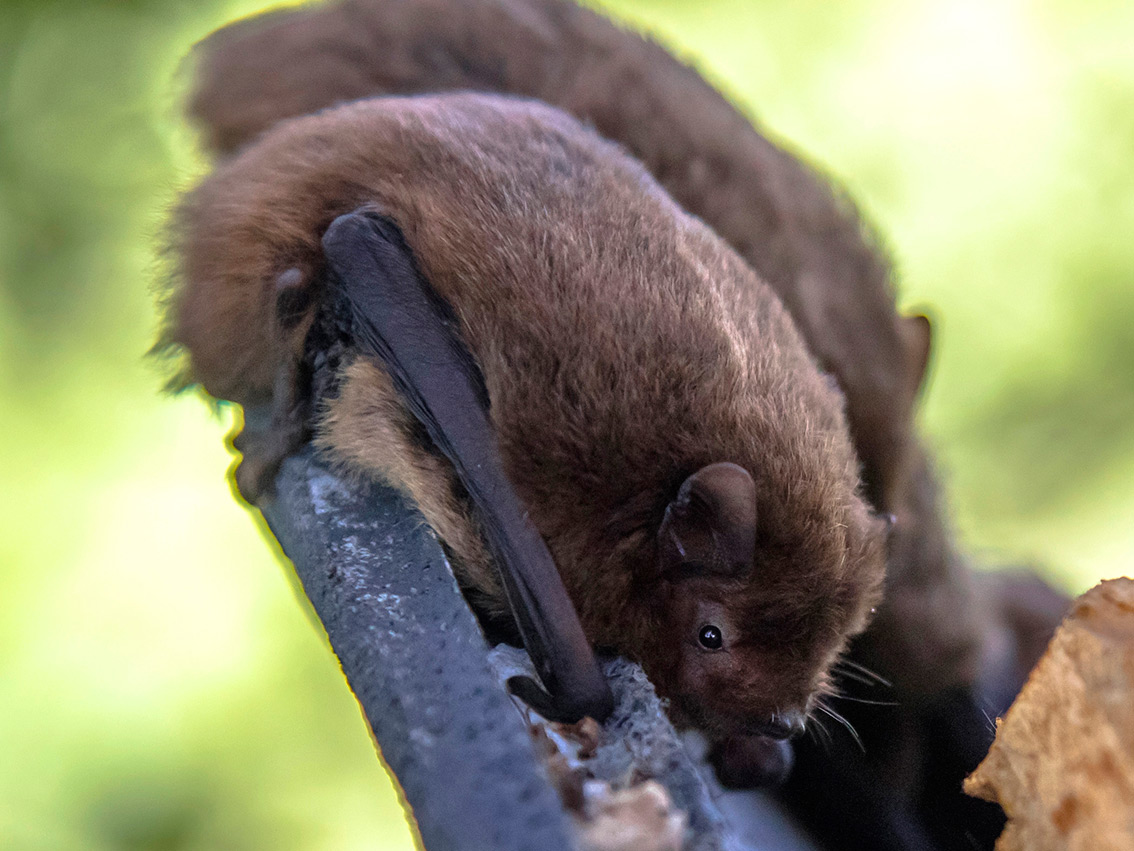
At Ideas Medioambientales, we work to address the pine processionary moth problem through proper management of forest areas, reforestation, and other plantations, promoting species diversity and environmental heterogeneity. We recommend avoiding the planting of exclusively coniferous trees in urban parks, recreational areas, and other places frequented by people to reduce potential harm. By installing nest boxes and bat shelters, we facilitate the presence of birds and bats, which feed on both the caterpillars and the adult moths, acting as biological control agents.
Scenarios like that of the pine processionary moth highlight the importance of proper natural environment management. Given the global change we are currently facing, fostering more diverse habitats provides systems that are more resilient to potential impacts, which translates into better environmental health.
Bibliography:
Torres, L. (2016). Study of the population dynamics of the pine processionary moth in the Sierra Nevada natural area within the framework of global change. Applied analysis for adaptive management (Doctoral dissertation, University of Granada).
López, E. (2014). Study of the population dynamics of the lepidopteran Thaumetopoea pityocampa (Denis & Schiffermüller, 1775) in the province of Valencia. Doctoral Thesis. University of Valencia.
Hódar J.A., Aspizua R., Bollullos C., Zamora R. (2015). Population dynamics of the pine processionary moth: responses to changes in climate and forest management. In: Zamora R., Pérez Luque A.J., Bonet F.J., Barea-Azcón J.M., Aspizua R. (eds) The footprint of Global Change in Sierra Nevada: challenges for conservation. Ministry of Environment and Spatial Planning. Regional Government of Andalusia, pp 159–161.
Hódar, J. A. (2015). Incidence of the pine processionary moth as a consequence of climate change: forecasts and possible solutions. Forests and Biodiversity in the face of Climate Change: Impacts, Vulnerability and Adaptation in Spain. Ministry of Agriculture, Food and Environment, Madrid, 295-302.
.avif)
.jpeg)