.avif)

Three days, ten sessions, one landmark conference
Toledo hosted from May 6 to 8, 2026 the 13th National Congress on Environmental Impact Assessment, the benchmark event for the environmental sector in Spain. Over three days, the El Greco Congress Palace brought together professionals, researchers, public administrations, and companies to discuss the most urgent challenges in environmental assessment: from the integration of artificial intelligence into procedures to wind repowering, as well as social sustainability, cumulative effects, and biodiversity protection.
For Ideas Medioambientales, this edition was the most intense in our history at the congress. As official sponsors of CONEIA 2026, our team was present for all three days with over ten contributions, including panels, debates, workshops, and technical presentations. This post provides a full summary of our participation.
Debates: environmental assessment as a social tool
Social sustainability in the Urban Qualification process
Valentín Cano Iglesias, coordinator of the Sustainability area, led Debate 1 of the congress, focusing on one of the sector's hottest topics: incorporating social sustainability into the urban and environmental processing of projects.

The social license is no longer an abstract concept. It is a variable that determines the real viability of projects, and environmental assessment procedures must reflect this. The debate brought together the Administration and private developers at the same table to explore how to institutionalize social sustainability without falling into arbitrariness or social vetoes.
Panels: wind repowering and artificial intelligence
Environmental Impact Assessment (EIA) in Wind Farm Repowering — with IBERDROLA Renovables
Joaquín Ortega, co-director of the Environmental Assessment area, participated as a speaker in Panel 12, coordinated by Iberdrola Renovables, on environmental impact assessment in wind farm repowering. It was one of the most well-attended sessions of the congress, and for good reason: repowering has become one of the major technical and regulatory challenges of the energy transition in Spain.
.png)
The thesis we defended is clear: repowering is not a new project on a blank slate, but it is not a simple continuation either. It requires a differential EIA, based on comparing the future impact with that of the current wind farm, taking into account the already transformed environment, pre-existing impacts, and the communities that have been living with the installation for years.
Intelligent Environmental Assessment: the role of Artificial Intelligence
Friday's Panel 15 was, without a doubt, one of the most anticipated moments of the congress for our team. Luis Alfonso Monteagudo, co-director of the Environmental Assessment area, coordinated the session, with Gaspar Arenas, coordinator of the Biodiversity area, as a speaker on behalf of Ideas Medioambientales, alongside representatives from the Government of Castilla-La Mancha, the University of Castilla-La Mancha, and our partner Jacinto Arias, from the Taidy team.
.png)
Artificial intelligence is not the future of environmental assessment. It is the present. At Ideas, we have been working for some time on developing our own tools and methodologies to make EIA more efficient, rigorous, and useful for decision-makers. This panel was an opportunity to share that work with the best professionals in the sector.
Workshop: cumulative and synergistic effects in environmental projects
Rosario Hernández, co-director of the Environmental Assessment area, coordinated Workshop 4, one of the most practical and participatory sessions of the congress. Titled “Potential Impacts: From Cumulative Effect to Synergy,” the workshop used four real-world cases — a photovoltaic project, a wind repowering project, a mining project, and an overhead high-voltage power line — to address how environmental impacts add up, amplify, and generate synergies that can radically change the outcome of an assessment.
.png)
Group work with real cases demonstrated something we are very aware of at Ideas: the assessment of cumulative and synergistic effects is not a formal formality; it is a critical methodological piece that requires rigor, experience, and the right tools.
Technical presentations: biodiversity, renewables, and methodology
Our team presented a total of six technical papers throughout the three days of the congress, covering some of the most active lines of research and work at Ideas Medioambientales:
Bioacoustics for automated bird census in impact studies
Esther Esteban, a colleague from the Biodiversity area, presented the results of applying bioacoustic techniques for automated bird census in environmental impact studies. This tool has enormous methodological potential to improve the quality and efficiency of wildlife inventories.
.png)
Bats and solar energy: effects of photovoltaic plants on chiropterans
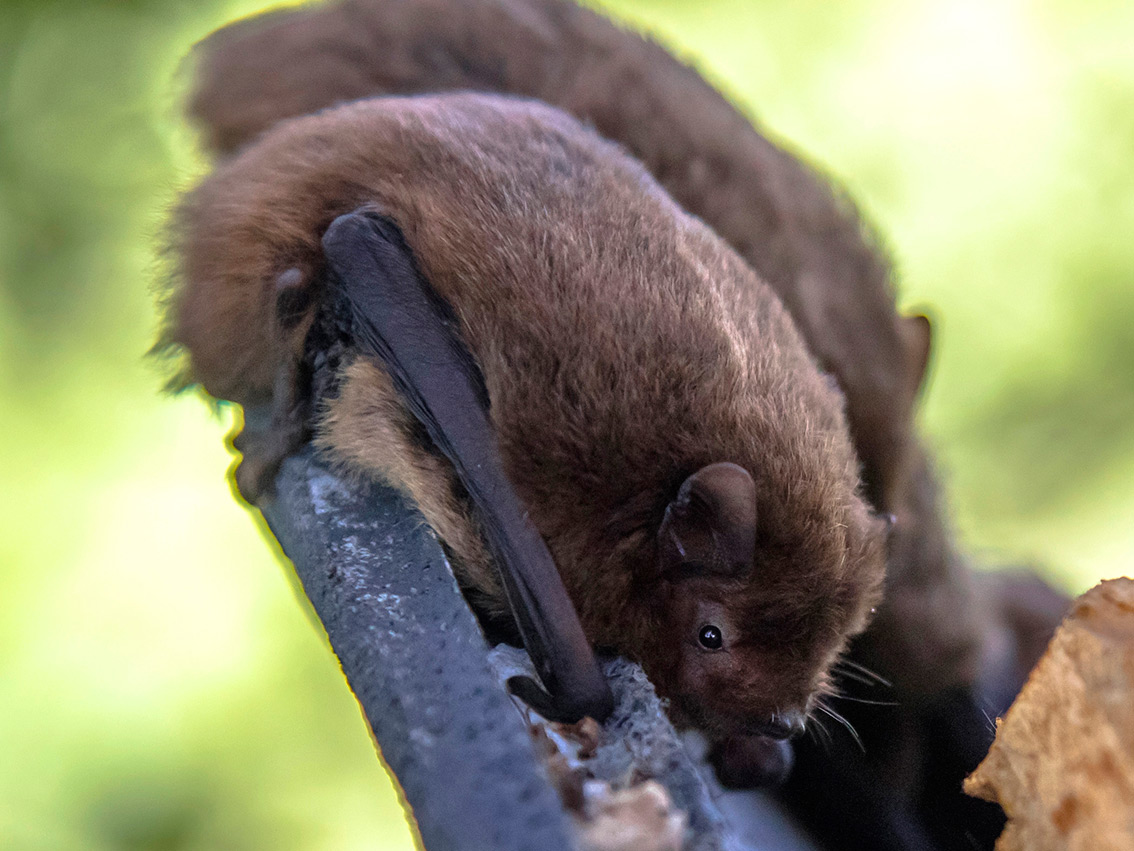
Gonzalo Páez, coordinator of the Biodiversity area, presented the results of our studies on how photovoltaic plants affect the conservation of bats. Biodiversity and the energy transition are two realities that must move forward together, and this work provides empirical evidence to do so better.
.png)
Local development plans: beyond compensatory measures
Iago Vázquez, Director of the Sustainability department, presented a methodological proposal to move beyond the traditional approach to compensatory measures in local development plans, advocating for an environmental assessment that creates real value for the territory.
.png)
Water treatment: emerging risks and control of the receiving environment
Raúl Mompó, a technician in the sustainability department, addressed the emerging risks associated with water treatment and the need for more robust methodological frameworks for monitoring the receiving environment in the environmental assessment of hydraulic infrastructure.
.png)
Current challenges in wind repowering
On Friday, Gonzalo Páez presented a specific paper on the main methodological and regulatory challenges of wind repowering in Spain, complementing the strategic vision of Panel 12 with data and real-world cases.
.png)
Professional profile of environmental assessment in Spain
Ideas Medioambientales is part of the Environmental Consulting Working Group of the Spanish Association for Environmental Impact Assessment (AEEIA), which presented its study on the professional profile of EIA in Spain at the congress. This is an essential collective effort to understand who we are as a sector and where we are headed.
Technical posters
In addition to the oral presentations, Ideas Medioambientales presented twelve technical posters in the Zocodover Hall during Wednesday's session. The posters will be available for download soon.
👉 Link to the poster download post
Conclusion
The XIII CONEIA confirmed what we already knew: environmental assessment in Spain has top-tier professionals with technical rigor and a commitment to improving procedures. Three days of conversations, debates, and shared work have left us with new ideas, new contacts, and a clear roadmap for continued progress.
.png)
See you at the XIV CONEIA!
Do you have questions about any of our presentations or want to learn more about our areas of work? Email us at ideas@ideasmedioambientales.com
.avif)
.jpeg)