-min.jpg)
.avif)

Saharan dust stains our skies and coats our cars, but it also fertilizes our soil and connects continents thanks to iberulites.
At Ideas Medioambientales, we want to take advantage of the Saharan dust episodes occurring these days to provide rigorous and accessible environmental education. Our goal is to turn a negative perception—orange skies and dirty cars—into an opportunity to understand how nature works on a global scale.
Each haze episode reminds us that we live on a deeply interconnected planet: what originates in the Sahara can end up fertilizing forests and transforming our own soils. You probably didn't know that, but at Ideas Medioambientales, we're here to explain it.
When the sky turns orange
Several times a year, air masses from the Sahara Desert reach the Iberian Peninsula, laden with suspended mineral particles. This phenomenon, known as calima, can reduce visibility, temporarily affect air quality, and, when it coincides with rain, leave deposits of fine mud on surfaces and vehicles.
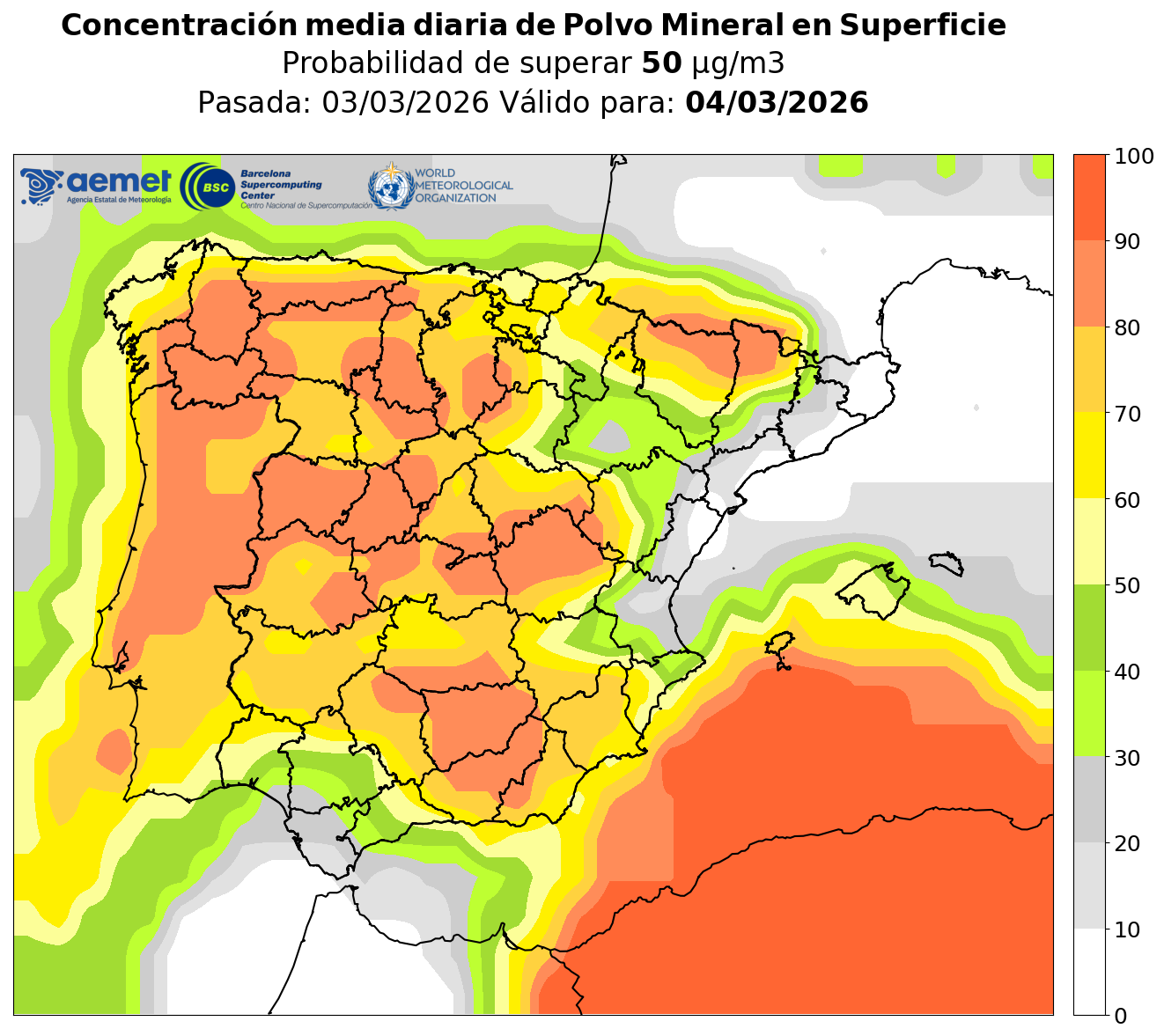
Although it can be visually striking—even "apocalyptic"—the truth is that we are witnessing a natural process that has been occurring for thousands of years and is part of the planet's atmospheric dynamics and its climatic and ecological balance.
What are iberulites?
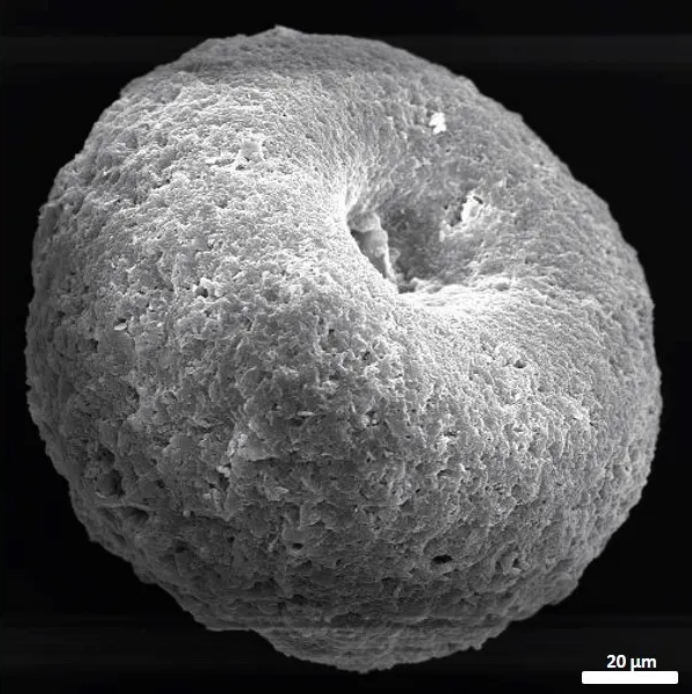
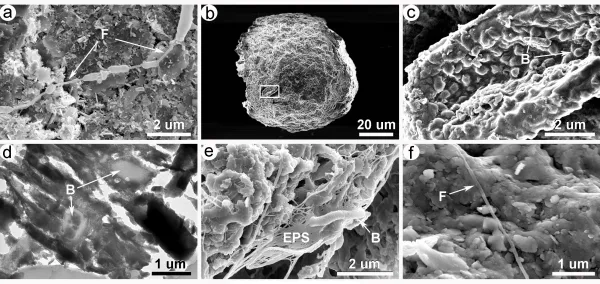
Iberulites are mineral microspheres present in Saharan dust. Their name and scientific characterization are due to research conducted by the University of Granada, where these particles with spherical morphology and complex internal structure were identified.
The term iberulite has a hybrid etymological construction:
- Iber- comes from Iberia, the classical name for the Iberian Peninsula. It refers to the place where they were described and studied in detail.
- -ulite derives from the Greek “líthos” (λίθος), which means stoneIn scientific terminology, the suffix -lith / -litho is frequently used to designate mineral particles or formations (for example, “oolith,” “aerolith,” “microlith”).
Therefore, iberulith can be interpreted as “small stone of Iberia” or “micro-mineral formation identified in Iberia.”
These are microscopic mineral aggregates that are extremely light and have a high capacity for atmospheric transport. In fact, they are so fine that they can travel thousands of kilometers while suspended in the atmosphere.
From the Sahara to the Amazon: a transatlantic journey
The transport of Saharan dust is not limited to Europe. Every year, enormous quantities cross the Atlantic and reach the Amazon basin. Thus, iberuliths are truly important for continental soil science, as these tiny mineral particles from Saharan dust enrich the soil by accumulating little by little with each dust storm event. On a global scale, millions of tons of this dust travel each year to places as far away as the Amazon basin, where an average of about 29 kg per hectare is deposited annually, with variations between 8 and 50 kg depending on transport conditions.
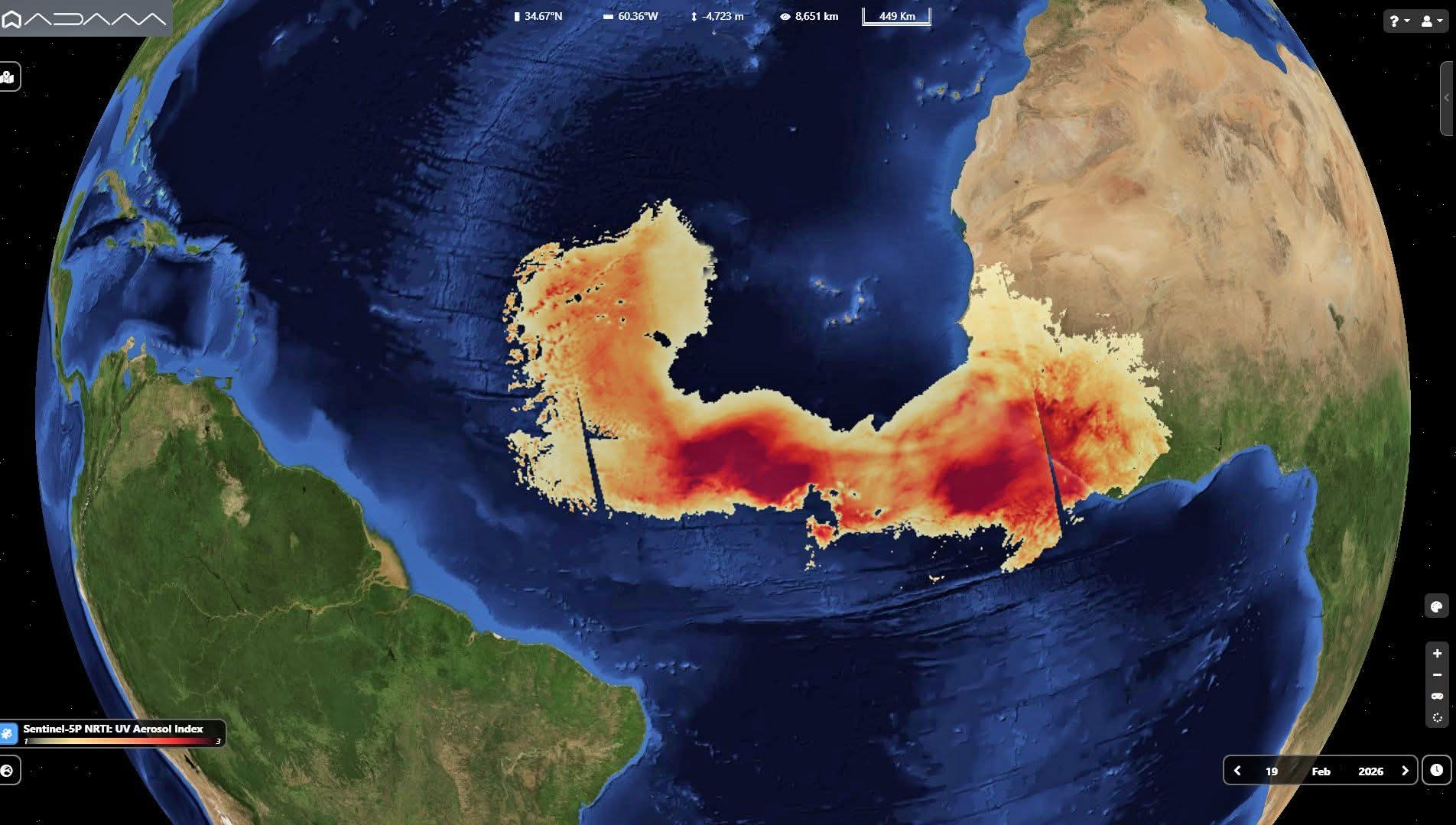
Studies released by NASA have shown that this dust provides essential nutrients, such as phosphorus, which help compensate for the continuous loss of minerals in tropical soils due to intense rainfall, demonstrating that even the finest dust can connect ecosystems and fertilize the Earth over time.
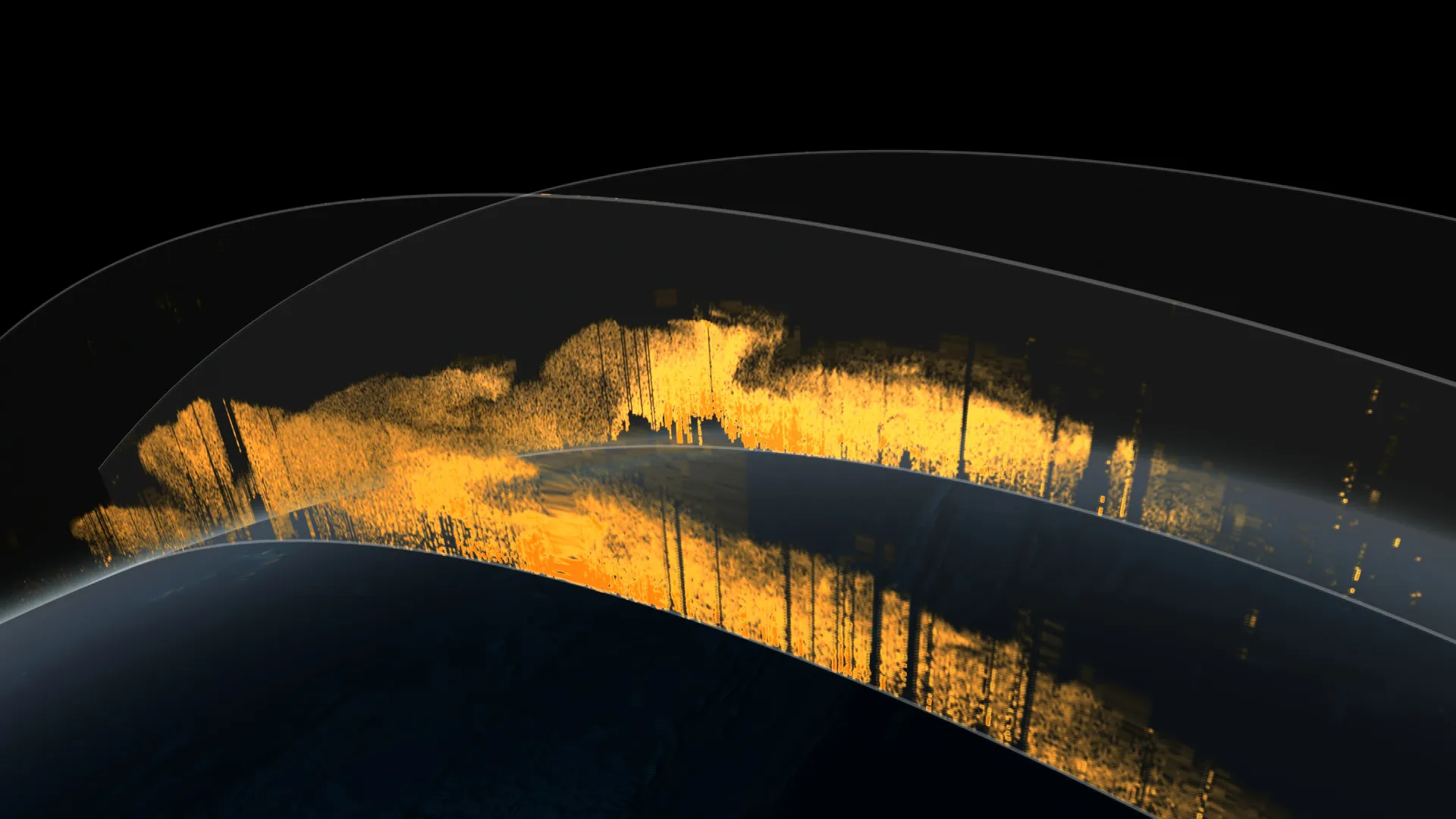
Video 01: For the first time, a NASA satellite has quantified in three dimensions the amount of dust that makes this transatlantic journey. Source: NASA
In other words, the world's largest desert contributes to the fertility of the planet's most biodiverse rainforest. An extraordinary example of ecological interdependence.
Microscopic shuttles of life
Another fascinating aspect is the role of iberuliths as biological vectors. These microstructures can transport bacteria and other microorganisms attached to their surface, facilitating their movement between continents.
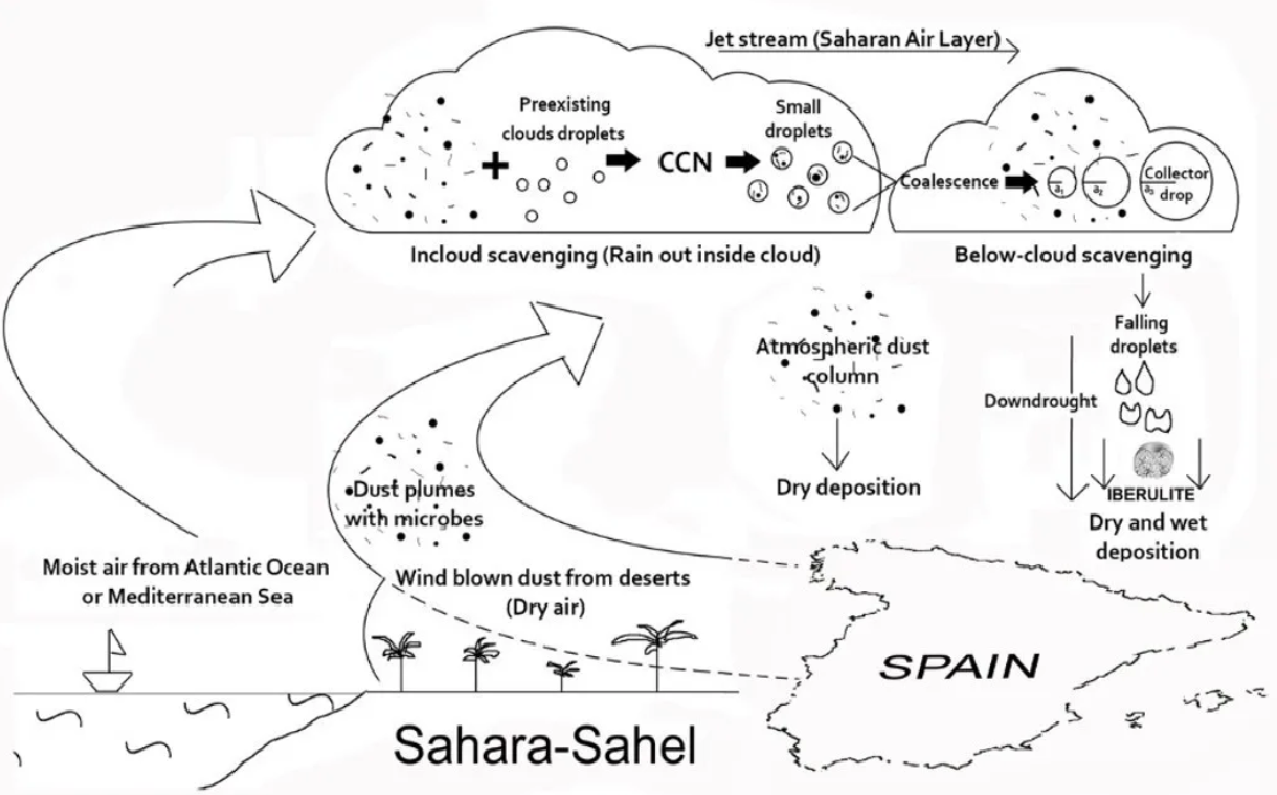
Thus, in addition to mineral nutrients, Saharan dust can act as a true “natural space shuttle,” connecting distant ecosystems through the transport of microscopic life.
This phenomenon reinforces a key concept in environmental outreach: ecosystems are not isolated. The atmosphere is a vast system of biological and geochemical connection.
Beyond the daily nuisance
It is understandable that mud rain causes frustration after washing your car. However, if we analyze the phenomenon in depth, we discover that it is part of an ancient natural cycle that contributes to:
- The formation and evolution of soils.
- The supply of nutrients to distant ecosystems.
- Biological connectivity between continents.
- Global biogeochemical balance.
Our team believes that disseminating this type of information is fundamental to changing the perception of natural processes. The next time the sky turns red, we can look at it with different eyes: not just as suspended dust, but as a story that connects Africa, Europe, and America.
Conclusion
Saharan dust and iberulites remind us that we live on an interconnected planet, where even the smallest particles play an essential role in global dynamics. Understanding these processes helps us value the complexity of the environment and strengthen our commitment to its study and conservation. At Ideas Medioambientales, we believe that understanding them is the first step toward managing them properly, because even a thin layer of dust can tell a story spanning millions of years and thousands of kilometers. Far from being an anomaly, this phenomenon is an example of nature in motion.
Links for further information
- University of Granada – research on iberulites
- https://www.sciencedirect.com/science/article/abs/pii/S0169809520311972
- NASA Earth Observatory – Saharan dust transport to the Amazon
- https://www.nasa.gov/centers-and-facilities/goddard/nasa-satellite-reveals-how-much-saharan-dust-feeds-amazons-plants/
- State Meteorological Agency (AEMET) – calima episodes
- Scientific articles on transatlantic mineral dust transport
.avif)
.jpeg)